
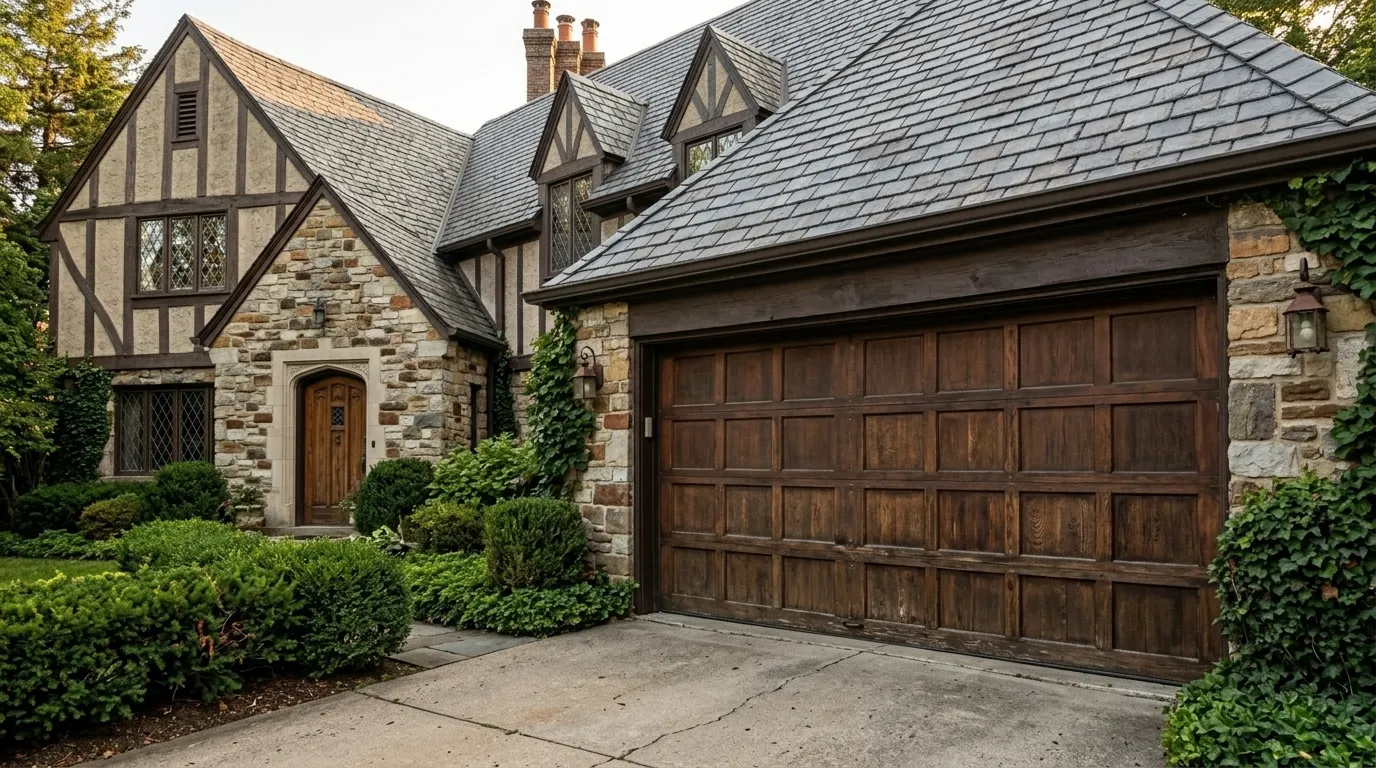
Fayetteville Garage Door Guide
Why So Many Fayetteville Garage Doors Predate Insulation Rules
Fayetteville homes built 1969-2003 often carry garage doors with no insulation layer, and cold winters here make that gap in the wall matter, and it shows.
- Licensed & Insured
- Same-Area Service Calls
- Upfront Pricing
When It Stops Being a DIY Job
Across this service area, most houses went up between 1969 and 2003, with the median build year landing around 1988. That matters more than the age number by itself. Doors installed on houses from that stretch typically shipped as a single layer of steel - no foam core, no thermal break, nothing between the outside air and your garage.
A dent in that panel, or a spring that's lost its wind, is a call-us job, but there's a bigger issue underneath the small ones: you can't retrofit an insulation layer into a door that wasn't built to hold one. The steel skin is too thin and there's no cavity designed for foam board or batts. Owners sometimes try adding a foil-backed kit from a hardware store, and it helps a little with radiant heat, but it doesn't touch the air leaking around the edges of a door built to a 1980s tolerance, not a current one.
Once you're past patching - once a panel's cracked, the bottom seal won't hold shape, or the door's racking in the track - you're not looking at a repair job anymore. You're looking at a door built for a different code, and the honest fix is a new door built for this one.
What Most People Get Wrong
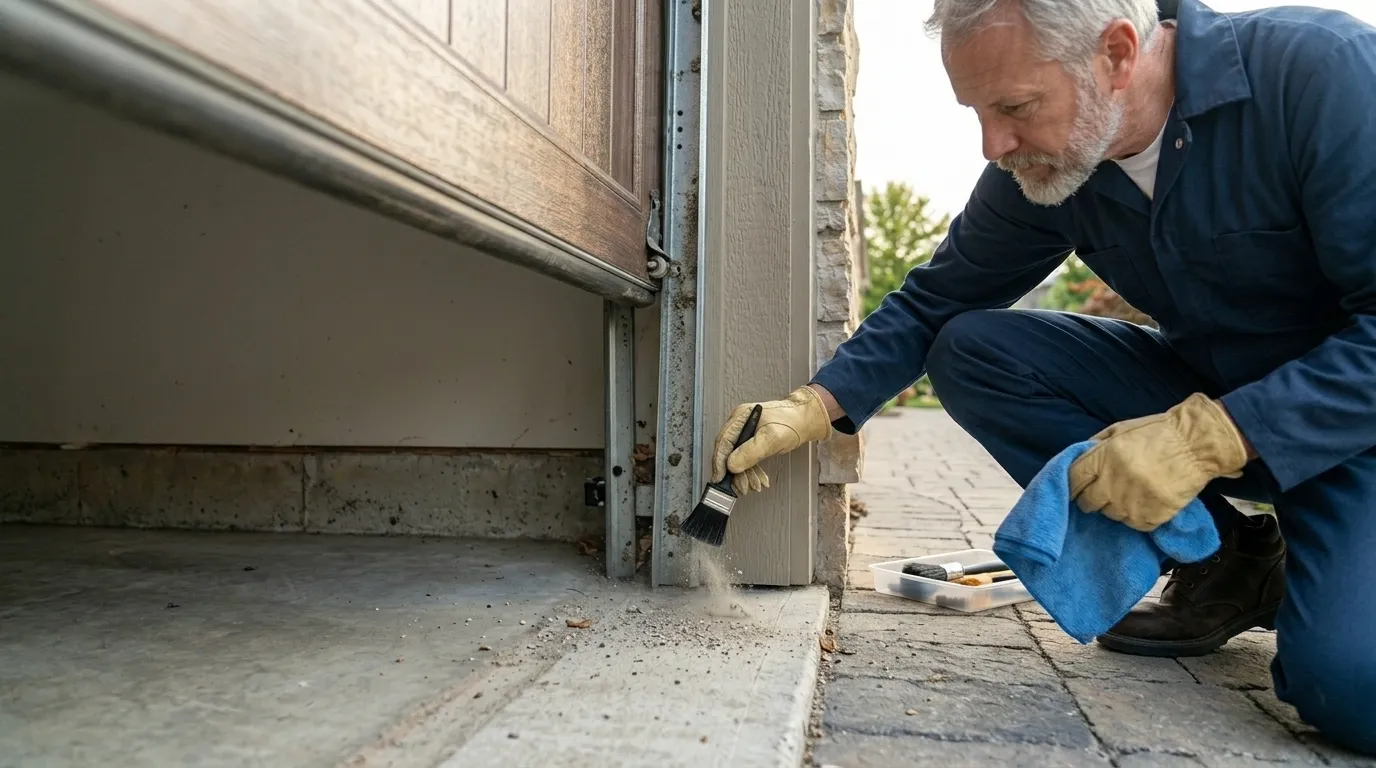
The common mistake is treating a cold garage as a weatherstripping problem. New bottom seal, new side seals, maybe foam tape around the header - and the draft's still there. Across the ten named areas that make up most of this housing stock, the doors themselves date to the same 1980s and 90s building wave, and that generation of door was never designed with an R-value target in mind.
The steel is doing the work the whole gap is supposed to do, and steel alone doesn't insulate much. The second mistake is assuming a new opener fixes an old door. A quieter motor doesn't change what's hanging on the track.
If the door itself came from that same era, swapping the opener out changes how it runs, not how it holds heat or how much it flexes in the cold. Worth saying plainly: not every door from this period needs to go. Plenty are structurally fine and just need springs, rollers, or a cable - replacing sound hardware because the door is old wastes money.
The tell is usually visible: warped panels, rust at the bottom corners, or a gap you can see daylight through when the door's shut.
What Is Going On
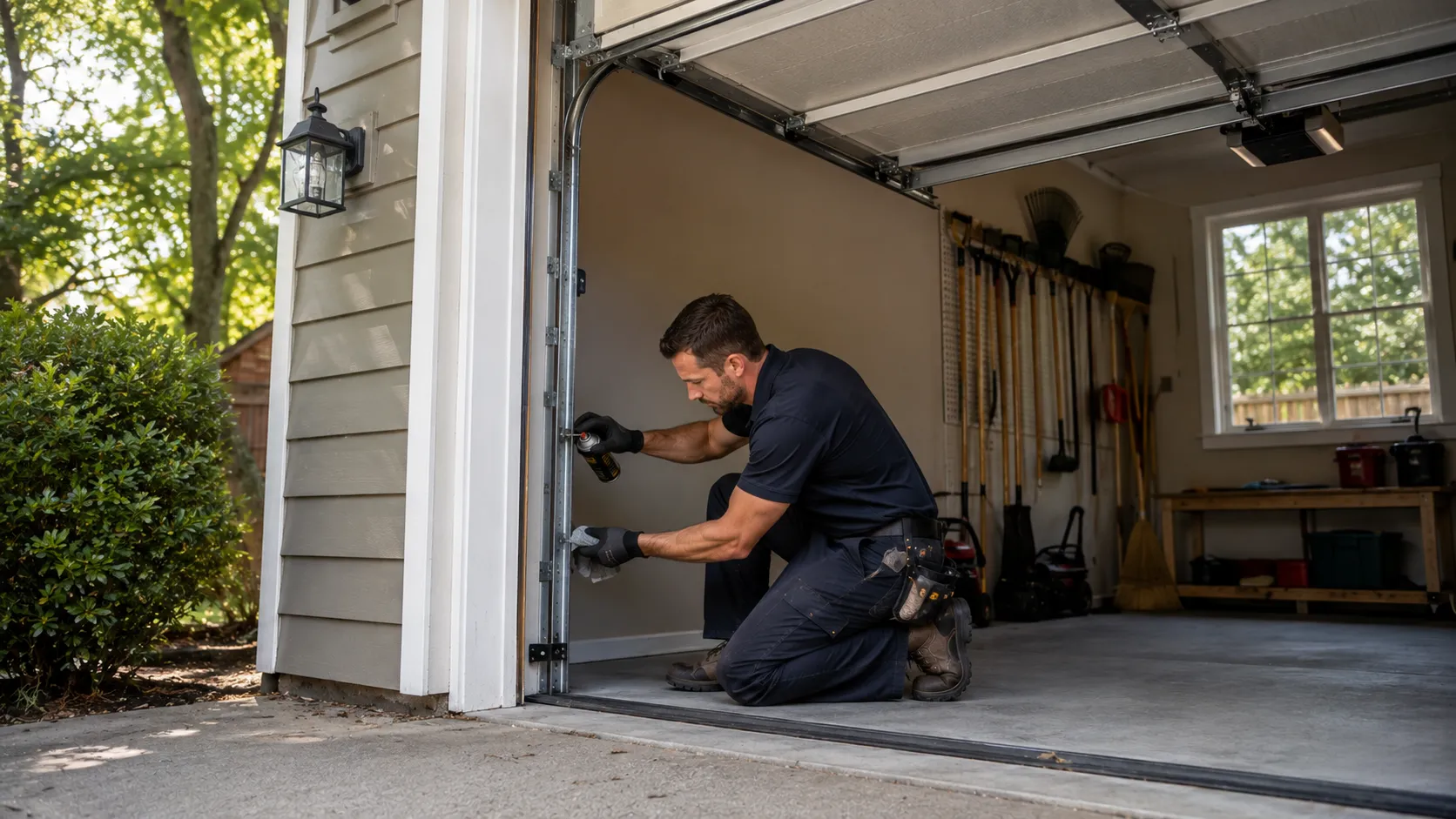
Building codes around insulation tightened well after most of the houses out here were framed. With a median build year around 1988, a lot of garage doors in this area came in under older manufacturing standards that didn't require a thermal barrier at all - the door was treated as an exterior wall opening, not as part of the building envelope. That's the gap.
A modern door has a polystyrene or polyurethane core sandwiched between two steel skins, sometimes with a thermal break at the track connection so cold doesn't travel straight through the metal. A door from the 1969-2003 window usually skipped all of that. It's one layer of rolled steel, ribs stamped in for rigidity and nothing else.
That's fine as a door. It's a poor barrier. Over time, the steel work-hardens at the stress points - hinges, the bottom roller brackets - faster than an insulated panel would, because it's flexing more with every temperature swing.
That's not a defect, it's just what an uninsulated single-skin panel does after three or four decades of use.
What the Weather Here Does to It
This area sits in a cold-moderate climate band - not the deep freezes you'd get further north, but enough swing through the winter to work on steel every year. An uninsulated door built in that 1969-2003 window doesn't just let heat out; it lets the panel itself expand and contract with every cold night and warmer afternoon. On houses out toward Hope Mills or Spring Lake, and the same is true closer in, that cycle is what eventually shows up as a bowed panel or a bottom seal that won't sit flat anymore.
Condensation is the other half of it. A cold steel door with warm, moist garage air on the other side collects moisture on the inside face, and that moisture runs down onto the bottom bracket and the floor track. Over years, that's rust at the corners before it's rust anywhere else.
None of this happens overnight, and none of it means the door needs to come out this season. But if your door dates to that build era and you're seeing rust at the bottom corners or a panel that doesn't sit flush anymore, the weather here is the reason, not bad luck.
How We Can Help
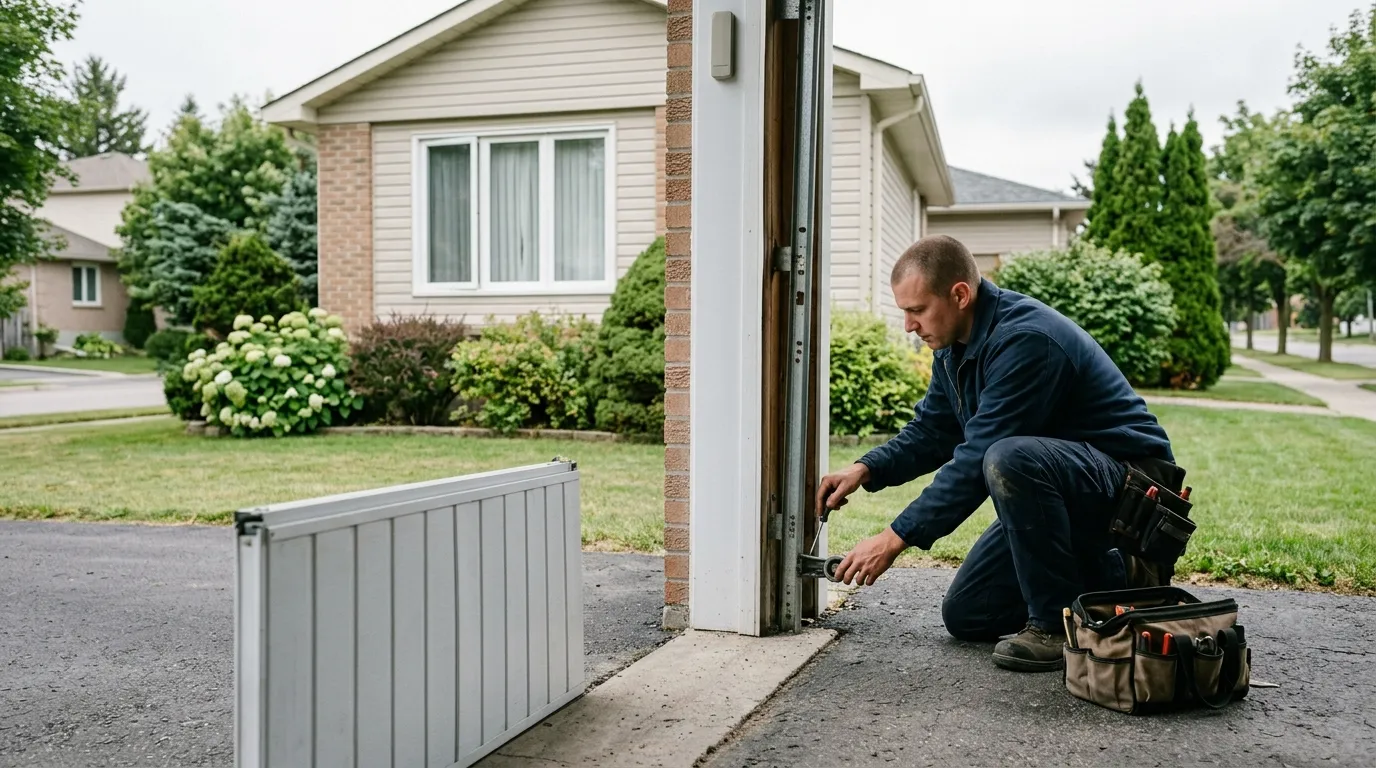
Garage Door Repair
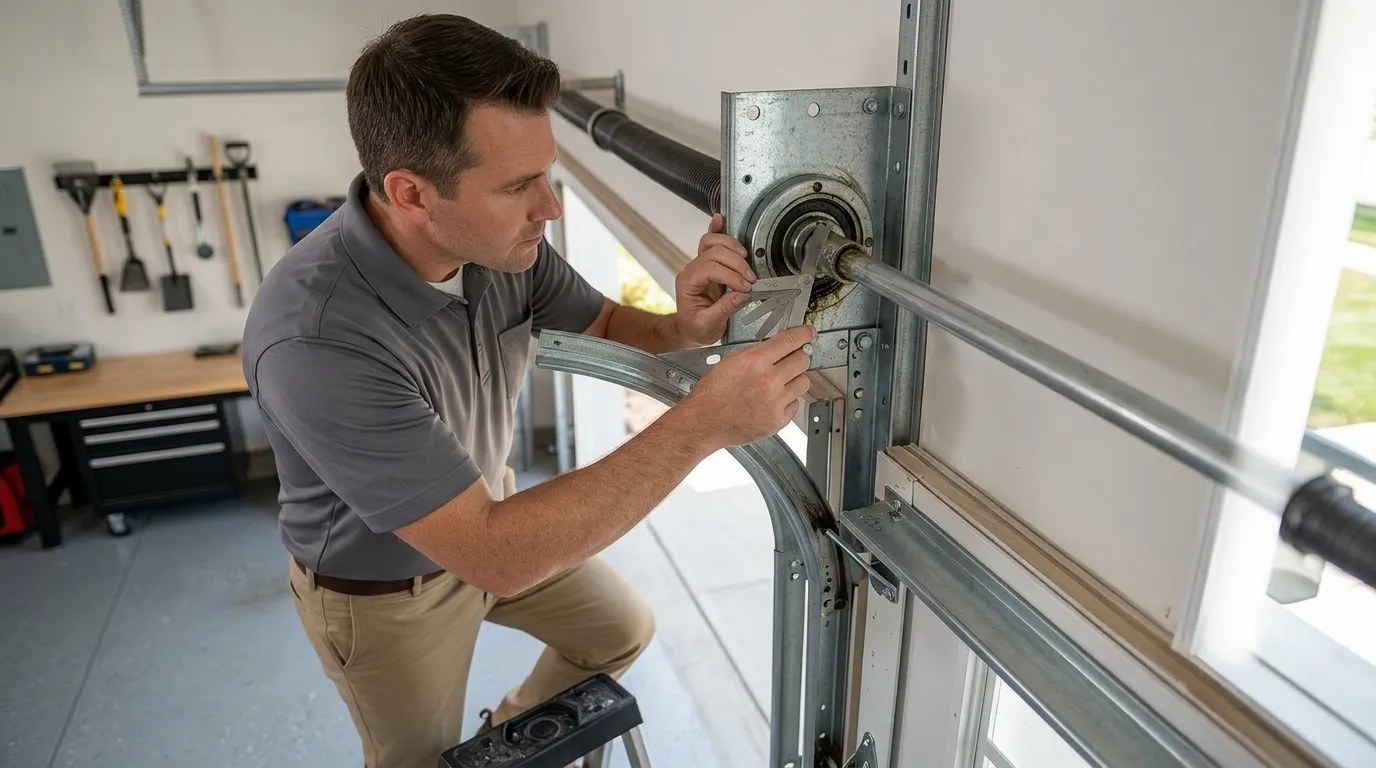
Springs, cables, tracks, rollers, and openers fixed by a tech who explains the problem before touching anything.
Learn more →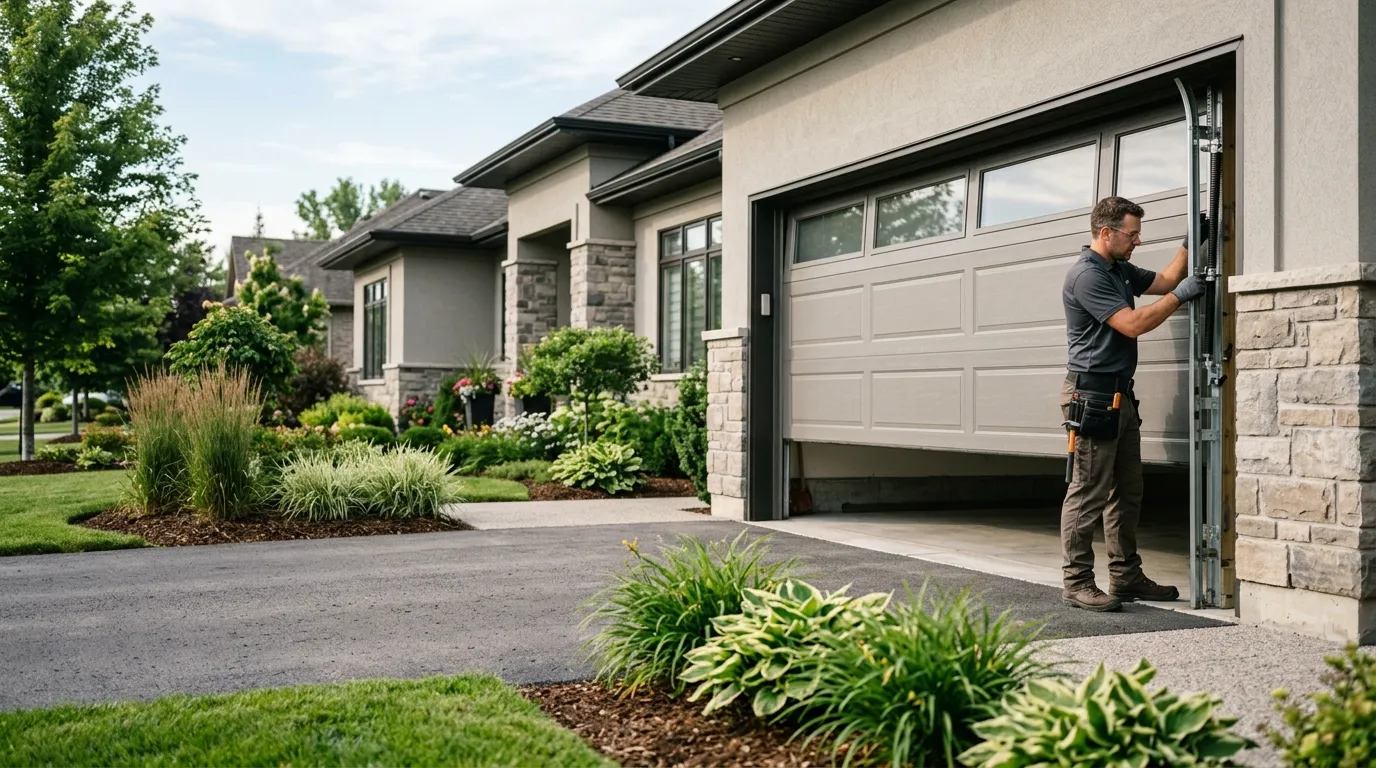
Garage Door Installation
New sectional doors sized and installed for the housing stock actually built in this area.
Learn more →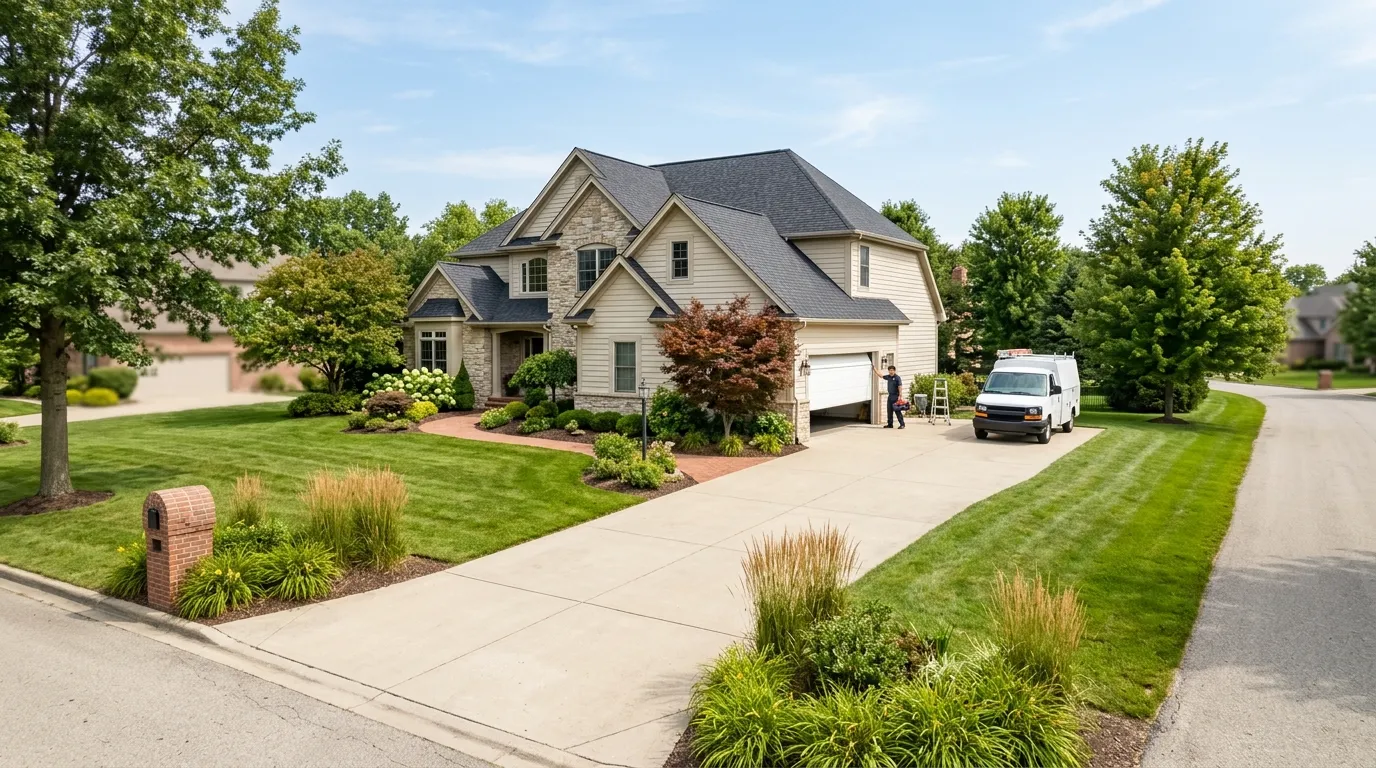
Garage Door Service
Tune-ups, lubrication, and safety checks that catch a small problem before it becomes a service call.
Learn more →Frequently Asked Questions
Can I add insulation to my old garage door instead of replacing it?
You can add a foil-backed kit, and it helps a little with radiant heat, but a single-layer steel door from the 1969-2003 build era has no cavity for real insulation. It slows heat gain a bit; it doesn't seal the edge gaps or stop the panel from flexing with cold nights. For a real fix, you're looking at a new insulated door, not an add-on.
How do I know if my garage door is from that older, uninsulated build?
Check the panel edge or knock on it - a single layer of steel sounds hollow and feels thin, with no foam visible if you look at a cut edge or a damaged spot. If your house falls in the common 1969-2003 build window for this area, odds are decent the original door never had a core.
Is it worth replacing a door that still works fine?
Not automatically. If the hardware - springs, rollers, cable - is sound and the door isn't warped or rusting at the corners, replacing it just for insulation isn't usually worth the cost. Replace when the panel's failing, not just because the build year is old.
Have a Door That Needs a Second Opinion?
Call and describe what it is doing - we will tell you what it likely is.