
Fayetteville Garage Door Guide
Cold Weather and Older Torsion Springs in Fayetteville
Fayetteville's 1980s-90s housing stock and cold snaps put extra strain on torsion springs. Here's what breaks, why, and when a call beats a DIY fix at home.
- Licensed & Insured
- Same-Area Service Calls
- Upfront Pricing
When It Stops Being a DIY Job
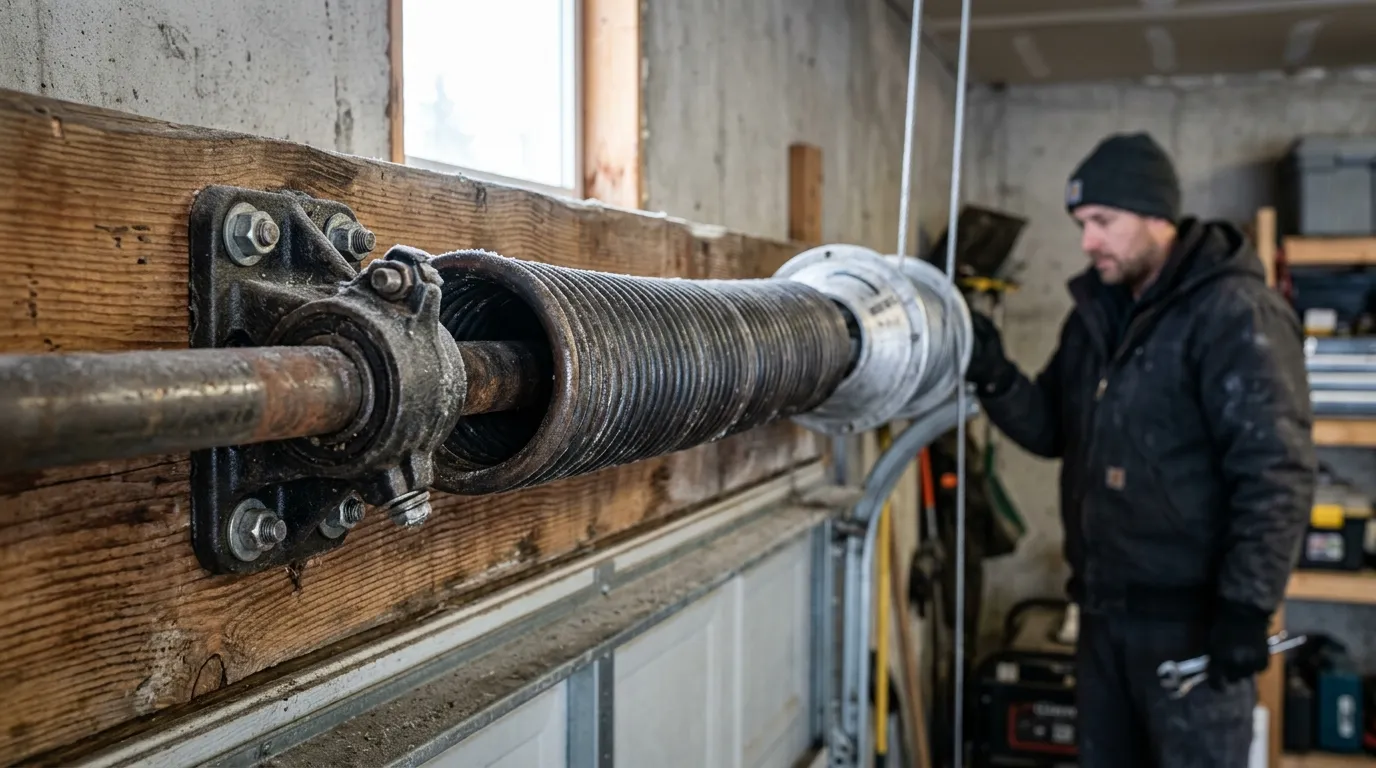
A torsion spring holds the full weight of the door under tension, and that tension doesn't care how handy you are. If the spring lets go while you're adjusting the winding cone, it can take a finger or worse. That's true anywhere, but it matters more here because most houses in this service area went up between 1969 and 2003, median build year 1988, which means a lot of what's on the wall is original builder-grade hardware pushing 35 years old.
Old steel doesn't behave like new steel. It's fatigued, sometimes rusted at the coil ends, and it can fail with less warning than a spring installed last year.
If the door is off its track, if a cable has jumped the drum, or if you hear a bang and the door won't move at all, that's a call, not a project. We'll say plainly what we won't do: we don't recommend re-tensioning a 30-year-old spring instead of replacing it, and if the drums or bearing plates are worn to match, we'll tell you that too rather than patch one part and leave the rest to fail in six months. Sometimes the honest answer is a full hardware swap, not a spring swap.
What Most People Get Wrong
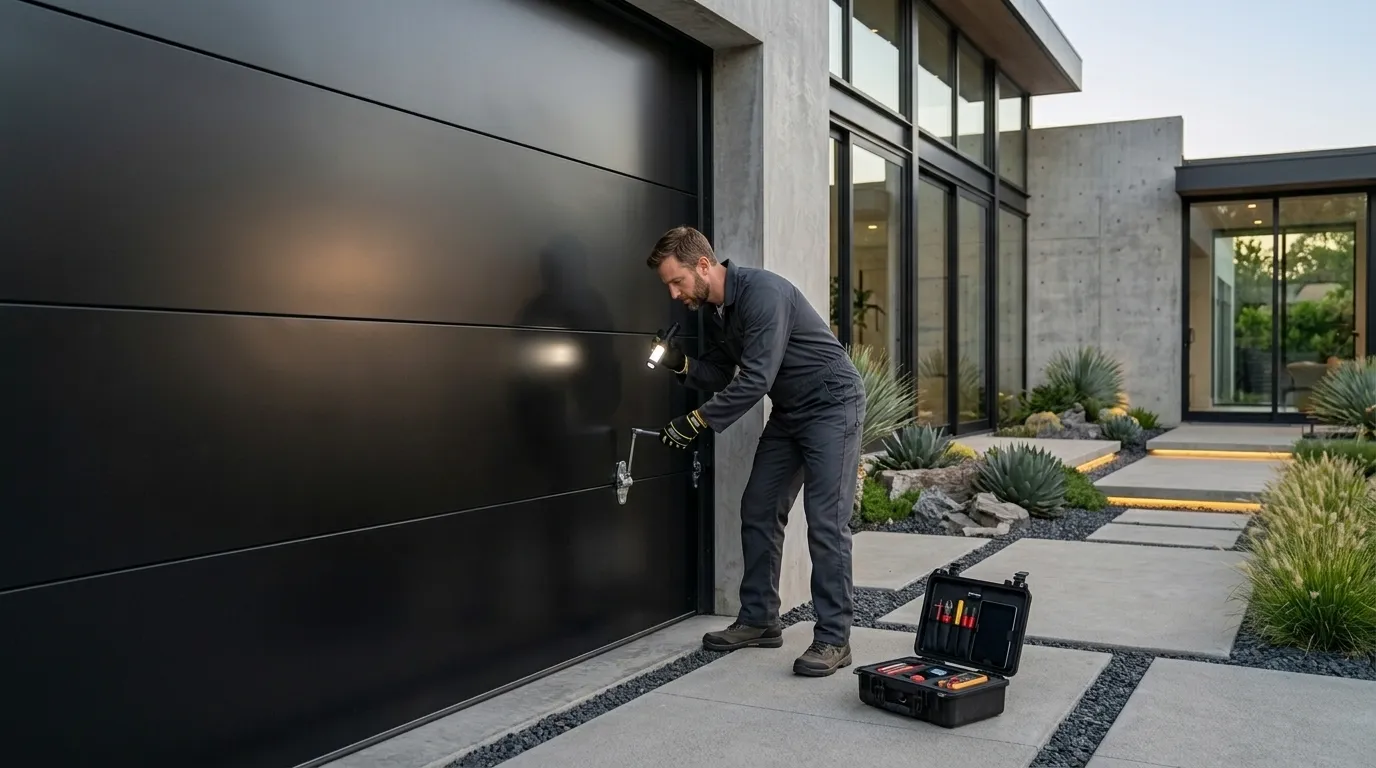
The most common mistake isn't touching the spring itself - it's assuming the door behaves the same in January as it did in July. Steel contracts in the cold. A torsion spring wound to a certain tension on a 70-degree day in April is a different piece of hardware after a hard overnight drop into the 20s.
People notice the door feels heavier, or the opener strains and clicks off, and they assume the opener is failing. Often it's the spring losing lift right when the cold is asking more of it.
The second mistake is judging spring health by looks. A spring can look fine - no visible rust, coils tight - and still be near the end of its cycle life if it's original to a house built in the late 1980s or early 90s, which describes a large share of the stock across the ten named areas in this part of the county.
Age and cycle count don't show up as a visual crack. They show up as a snap on a cold morning when the door's under full load going up.
What Is Going On
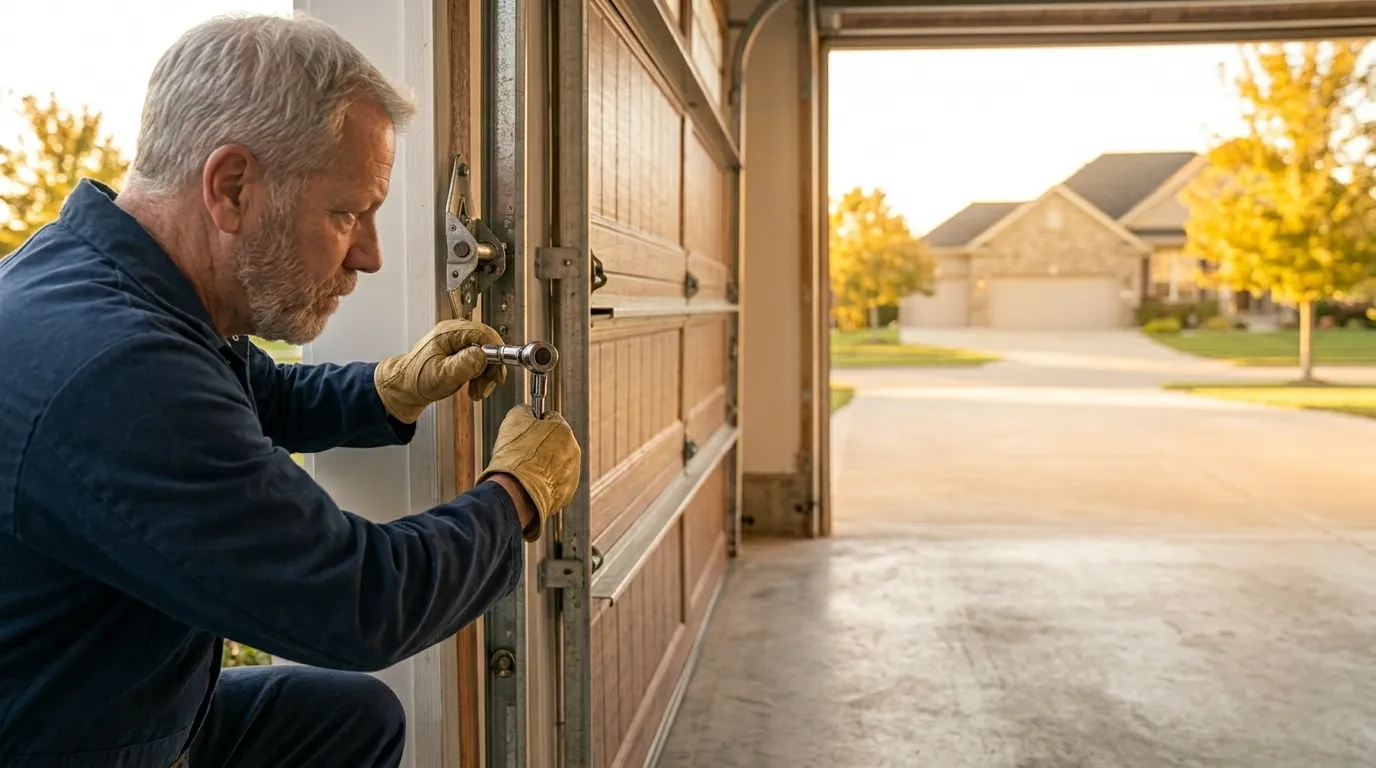
A torsion spring stores energy by twisting. Cold metal is more brittle and less forgiving of that twist than warm metal, so the same spring that flexed fine in August is closer to its breaking point on a 25-degree morning. Add 30-plus years of daily cycles - a builder-grade spring installed when a house went up sometime between 1969 and 2003 has likely opened and closed that door somewhere north of ten thousand times - and you've got metal that was already near the end of its service life getting hit with the one condition that pushes fatigued steel over the edge.
This is why late fall and midwinter are when we see the most spring calls tied to age rather than damage. It's not one dramatic event.
It's decades of cycling meeting a cold snap on a spring that was already thinning out. Nothing about a newer spring, or a newer house, sets up that combination the same way.
What the Weather Here Does to It
This area sits in a cold-moderate climate band - not the deep freezes you'd get further north, but enough real cold snaps through the winter to matter, especially for hardware that's already old. The swings are the problem more than the depth of the cold: a door that's fine at 55 degrees on a Tuesday and facing a hard drop by Thursday night puts real stress on a spring that's been slowly losing temper for two decades.
Garages themselves add to it. Most aren't insulated or heated, so the spring and track sit right at outdoor temperature, sometimes colder than the air outside if there's no direct sun on that wall. Houses nearer Spring Lake and Hope Mills, and the older stock scattered toward Vander and Rockfish, tend to run the same builder-grade springs from the same era, so we see the pattern repeat across those areas in a way that's less about any one street and more about when the neighborhood went up.
How We Can Help
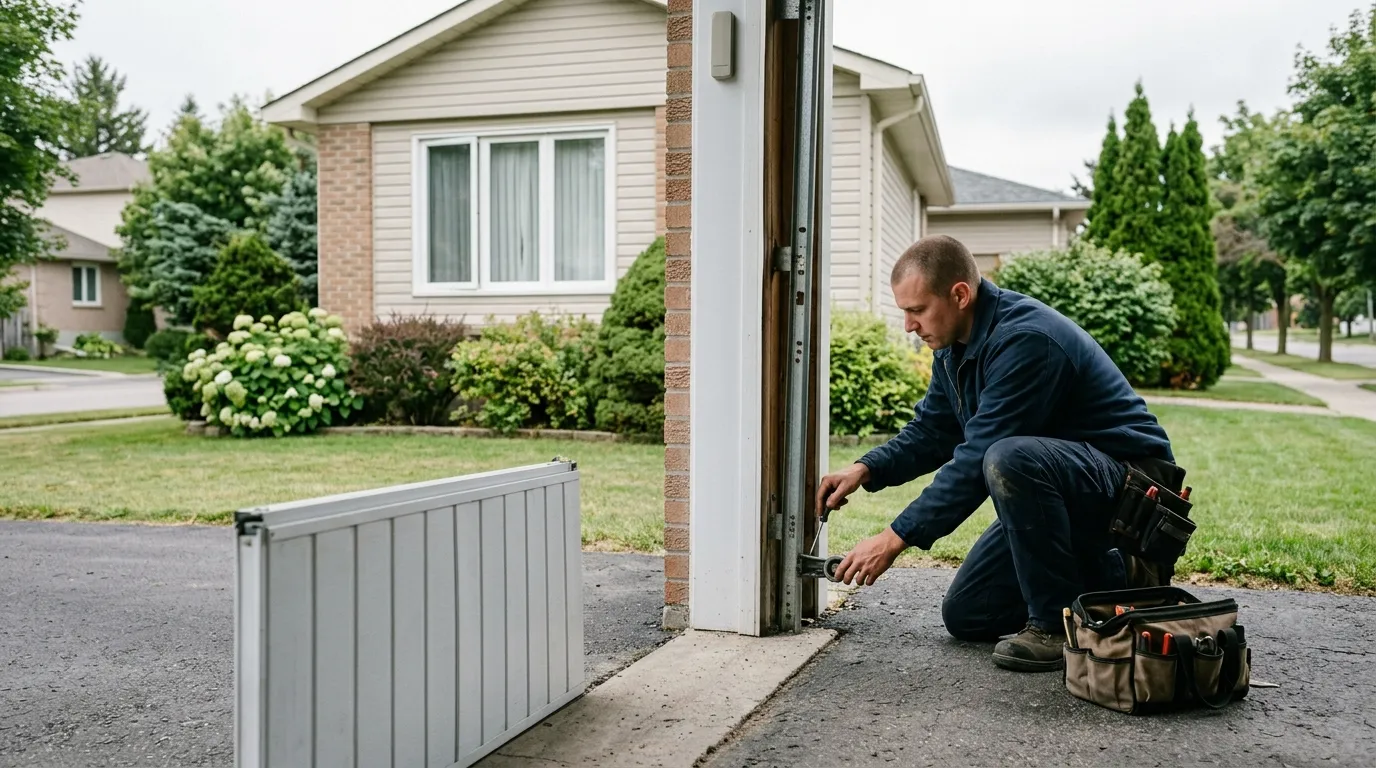
Garage Door Repair
Springs, cables, tracks, rollers, and openers fixed by a tech who explains the problem before touching anything.
Learn more →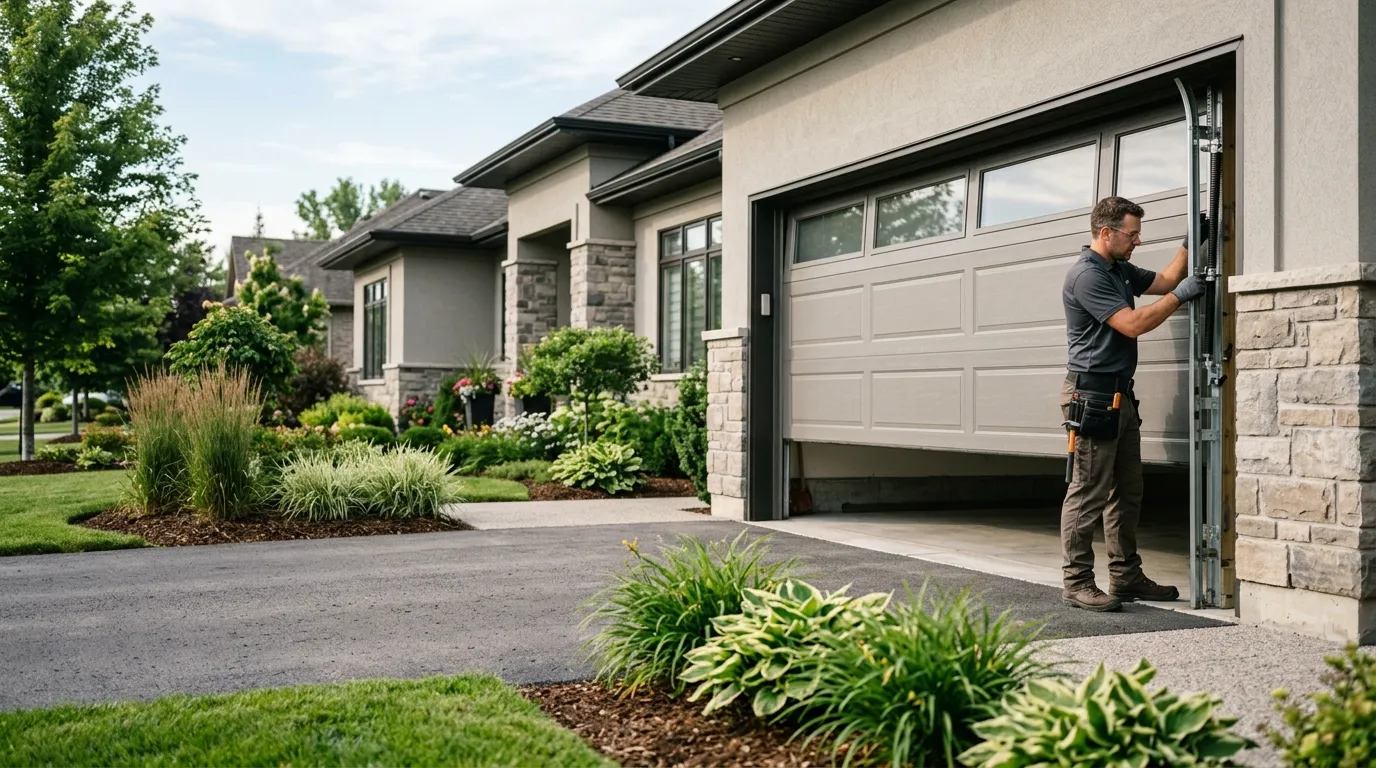
Garage Door Installation
New sectional doors sized and installed for the housing stock actually built in this area.
Learn more →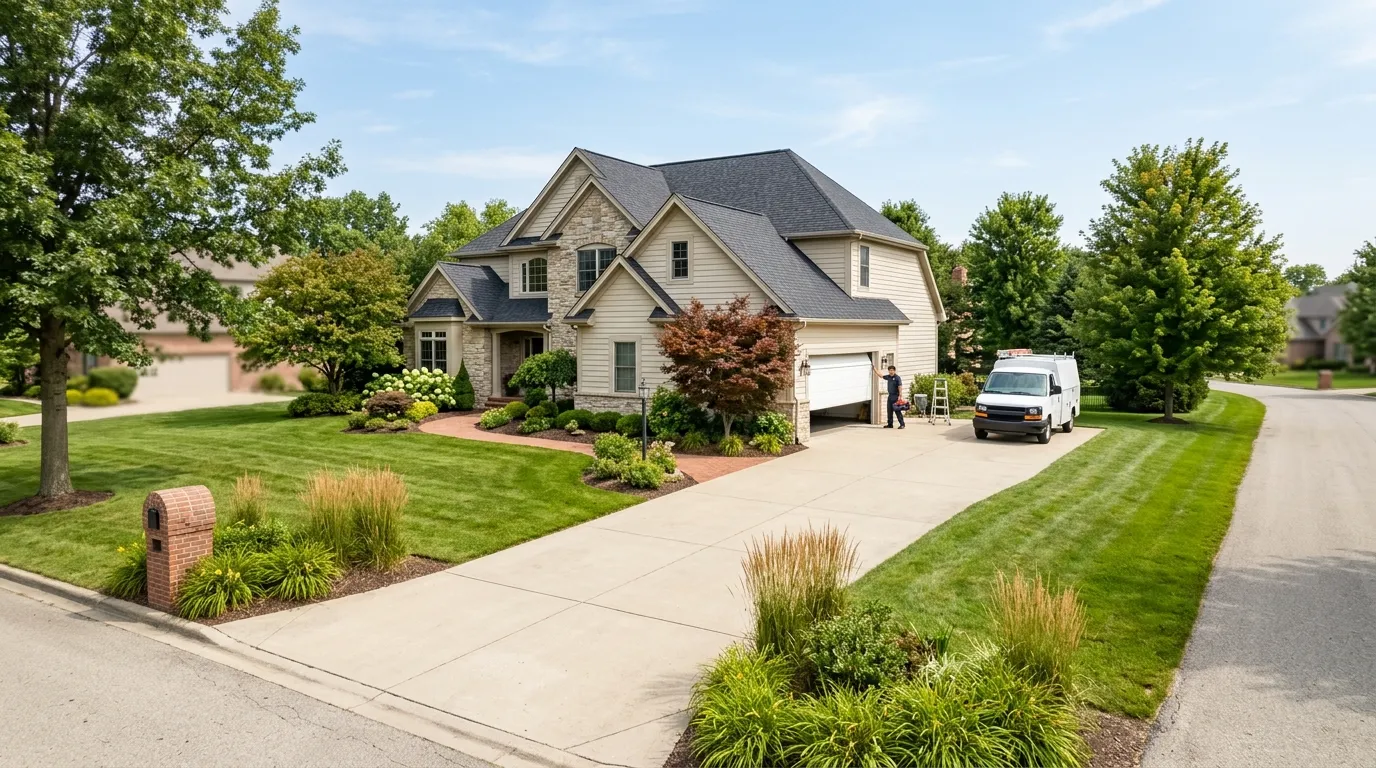
Garage Door Service
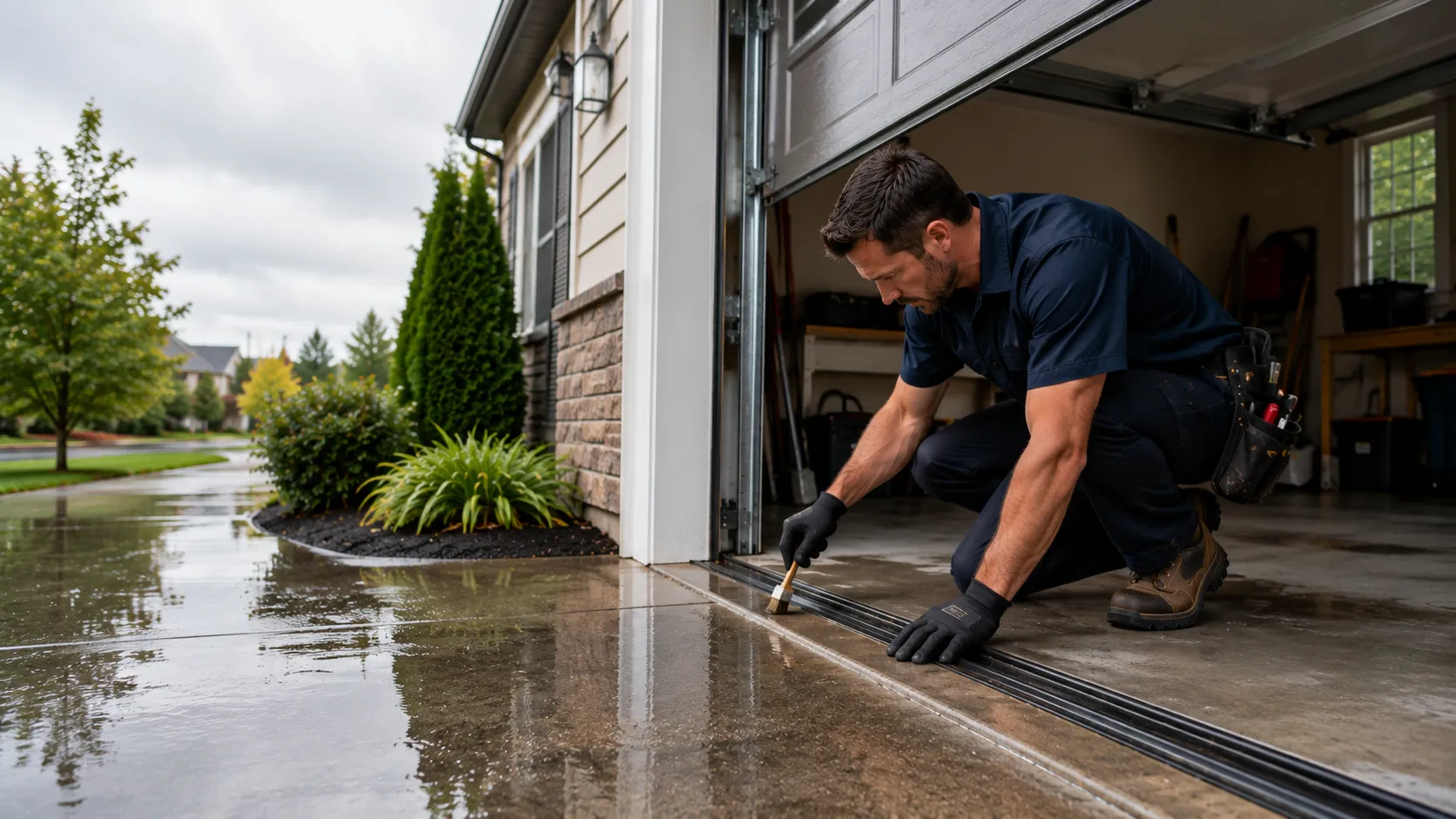
Tune-ups, lubrication, and safety checks that catch a small problem before it becomes a service call.
Learn more →Frequently Asked Questions
Why did my spring snap on a cold morning and not during the summer?
Cold steel is more brittle and holds less give under the same twist. A spring near the end of its cycle life - common in houses built in the 1980s and 90s here - is already close to failing, and a sharp overnight temperature drop is often the last push. It's less about the cold alone and more about old metal meeting a swing it can't absorb anymore.
Is my spring original to the house?
If your house was built anywhere in the 1969 to 2003 range that covers most of this area, and no one's mentioned a spring replacement, there's a real chance it's original. Builder-grade springs from that era weren't built for unlimited cycles, and three decades of daily use is a lot to ask of one coil of steel.
Can I just tighten the spring myself in cold weather?
We'd rather you didn't. Winding cones under tension are dangerous even for someone who's done it before, and cold makes old steel less predictable, not more. If the door feels heavy or the opener's straining, that's worth a call rather than a wrench.
Does every old spring need replacing before winter?
Not automatically - some run fine for years past when you'd expect trouble. But if the house is original-build from the 1980s or 90s and the spring's never been swapped, it's worth having someone look at cycle wear before the first hard cold snap rather than after it breaks.
Have a Door That Needs a Second Opinion?
Call and describe what it is doing - we will tell you what it likely is.