
Fayetteville Garage Door Guide
What an Older Garage Door Is Actually Worth Fixing
Most Fayetteville houses date to the 1980s-90s boom, which means original hardware nearing the end of its life. Here's how to tell if repair still makes sense.
- Licensed & Insured
- Same-Area Service Calls
- Upfront Pricing
When It Stops Being a DIY Job
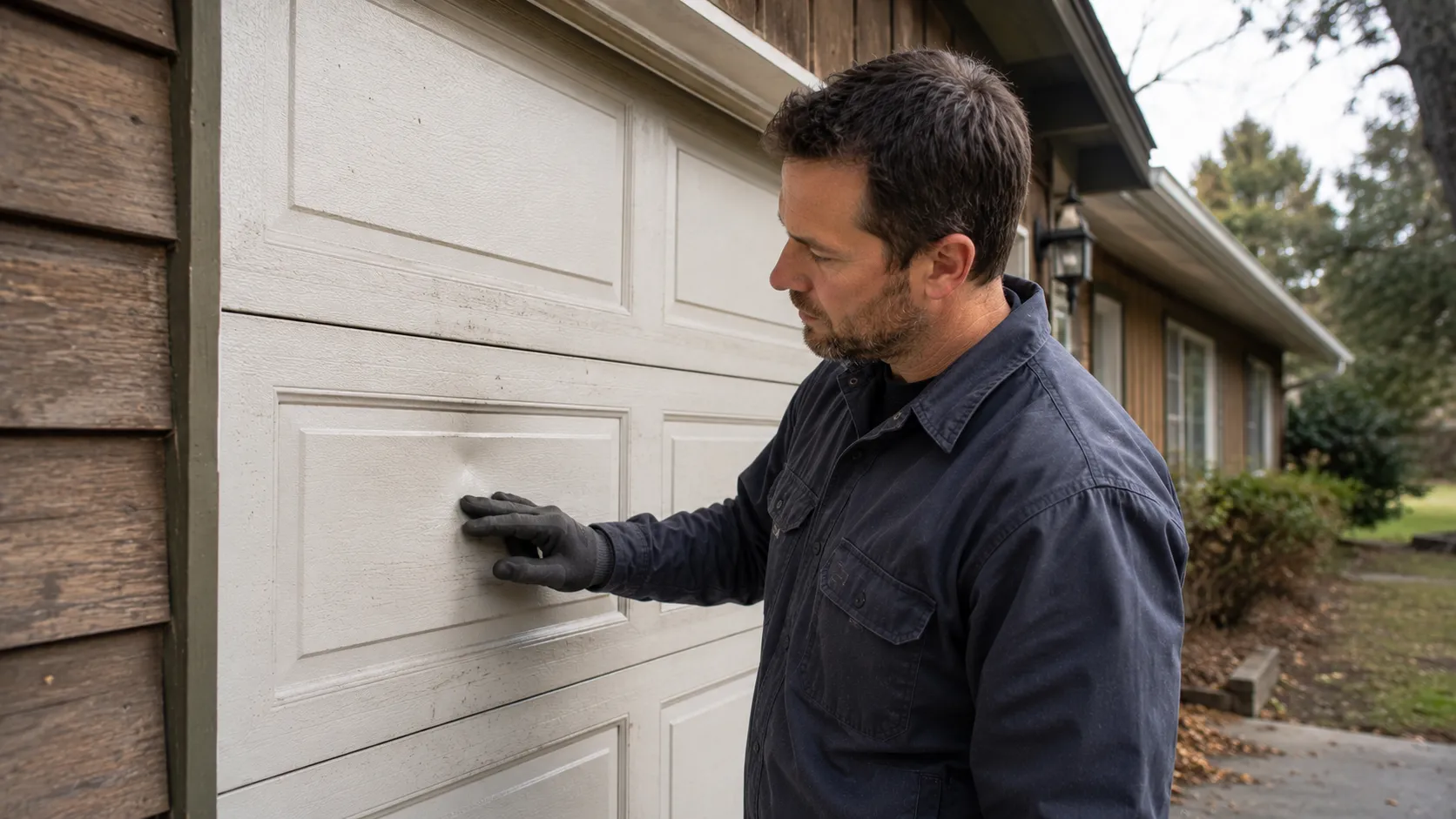
A lot of the doors we look at across Fayetteville were installed when the house was built, and F1 tells the story: most of this housing went up between 1969 and 2003, with the median landing around 1988. That means a huge share of doors in this service area are pushing 35 to 45 years on the original springs, rollers, and track. At that age, a spring isn't just old, it's fatigued metal that can let go under tension, and that's not a job for a ladder and a Saturday afternoon.
If your door is from that original build era and you're hearing a bang, a slow drop, or a cable that's frayed at the drum, stop opening it by hand and call. Anything past a bent hinge or a loose bolt on a door this old needs someone who's replaced enough torsion springs to know when the whole assembly, not just the part that broke, needs to come off.
What Most People Get Wrong
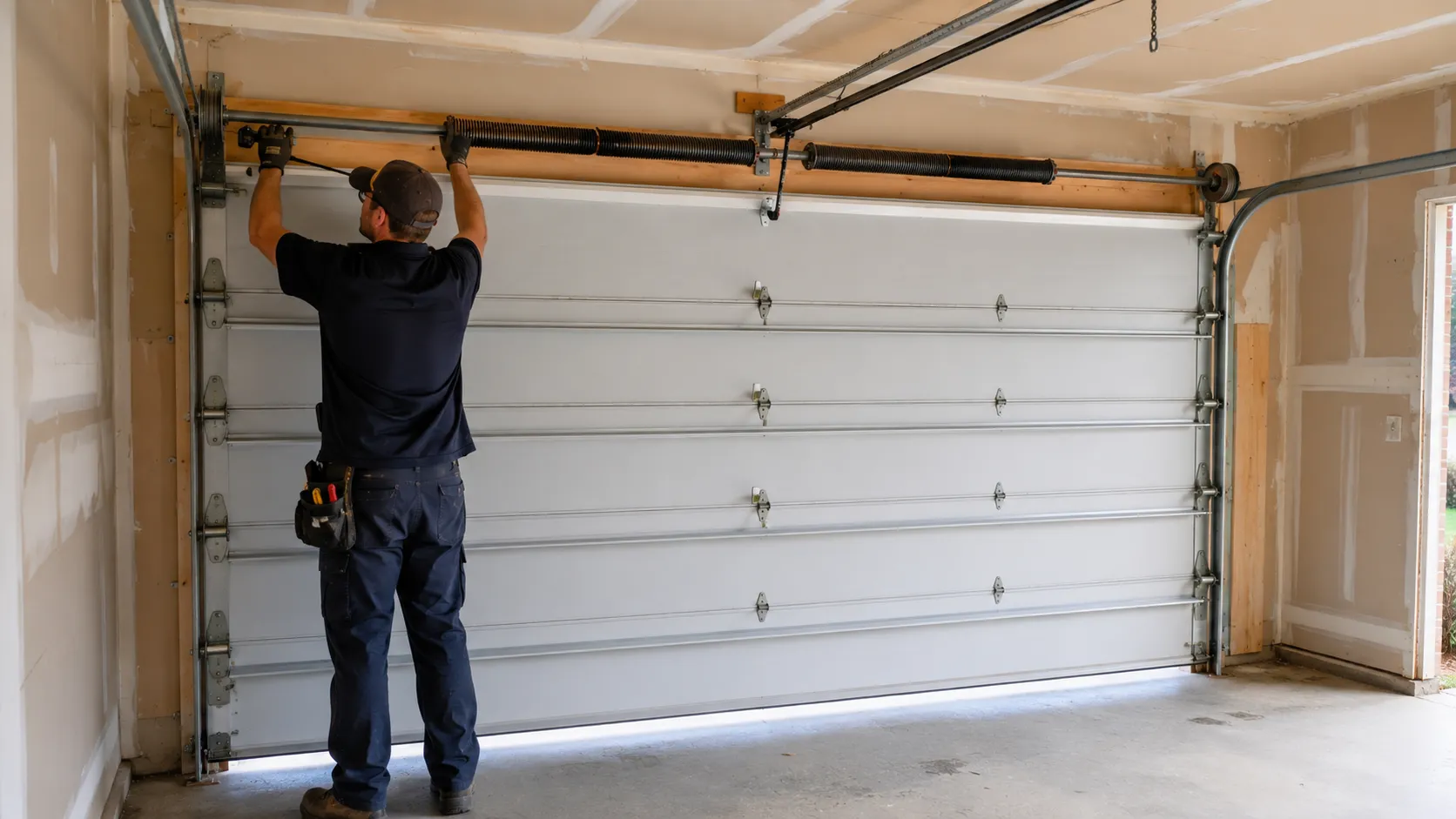
The mistake we see most in Fayetteville is homeowners assuming a noisy or sticking door means the opener is dying. Usually it's the opposite: the opener is a newer part bolted onto a mid-1980s to late-1990s door and track setup, per F2, and it's straining to compensate for worn rollers or a track that's shifted out of true. Replacing the opener without fixing what's underneath just buys you a quieter version of the same problem for another year.
The other common error is treating every repair as urgent. With 7,756 owner-occupied houses across a service area of 16,796 households and a median household income of $63,328, we know most folks here are budgeting a real repair bill, not an impulse buy. A worn but balanced door from the 1980s-90s stock can often run another five years on a spring and roller job.
A warped panel or a cracked bottom section is a different conversation.
What Is Going On
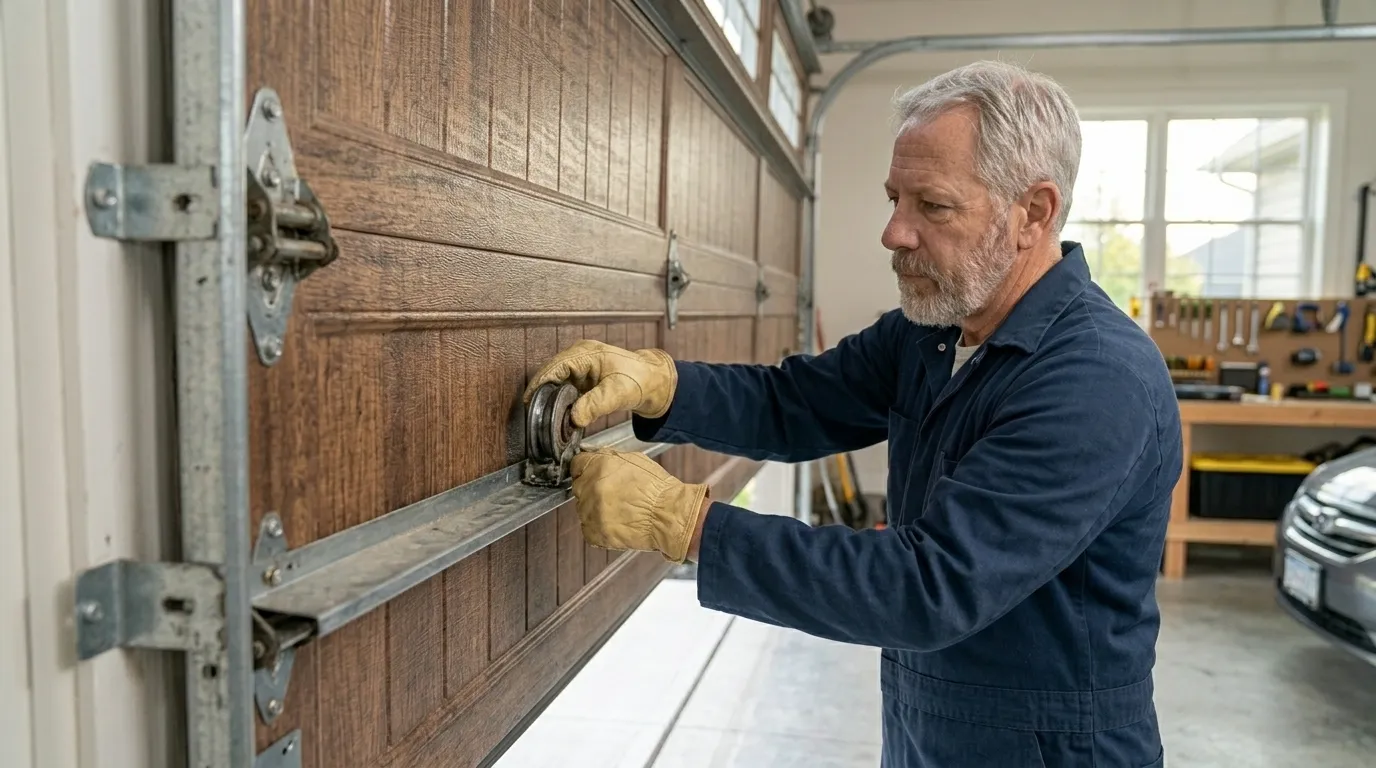
Doors from the 1980s and 90s building boom that shaped most of this area were built to a lower standard than what's sold today - thinner steel skins, single-layer panels, and hardware sized for lighter use. None of that was wrong for its time. It just means a door from that era wears differently than a 2015 model.
The track alignment tends to drift as the house itself settles, and the springs were often sized for the door's original weight, not for whatever's been added since - insulation kits, a heavier opener, a second layer of paint and caulk. ' That's usually enough to tell us whether we're looking at a $150 fix or a door that's earned its retirement.
What the Weather Here Does to It
Fayetteville sits in a cold-moderate climate band - not brutal, but with enough seasonal swing that steel expands and contracts and lubricant thins out and thickens twice a year. On an original door from the 1969-2003 building era, that cycle has run 30, 40, sometimes 50 times. Rollers that were nylon to start with get brittle at the edges.
Track bolts that were torqued once in 1988 loosen a fraction of a turn every winter. None of this shows up as a dramatic failure - it shows up as a door that's a little louder, a little slower, a little more off-center than it was five years ago. That gradual wear is exactly why an older door can look fine from the driveway and still be a week from a spring failure.
If your door's from that original build window and you haven't had the hardware checked, that's the honest reason to get it looked at before it's an emergency call, not after.
How We Can Help
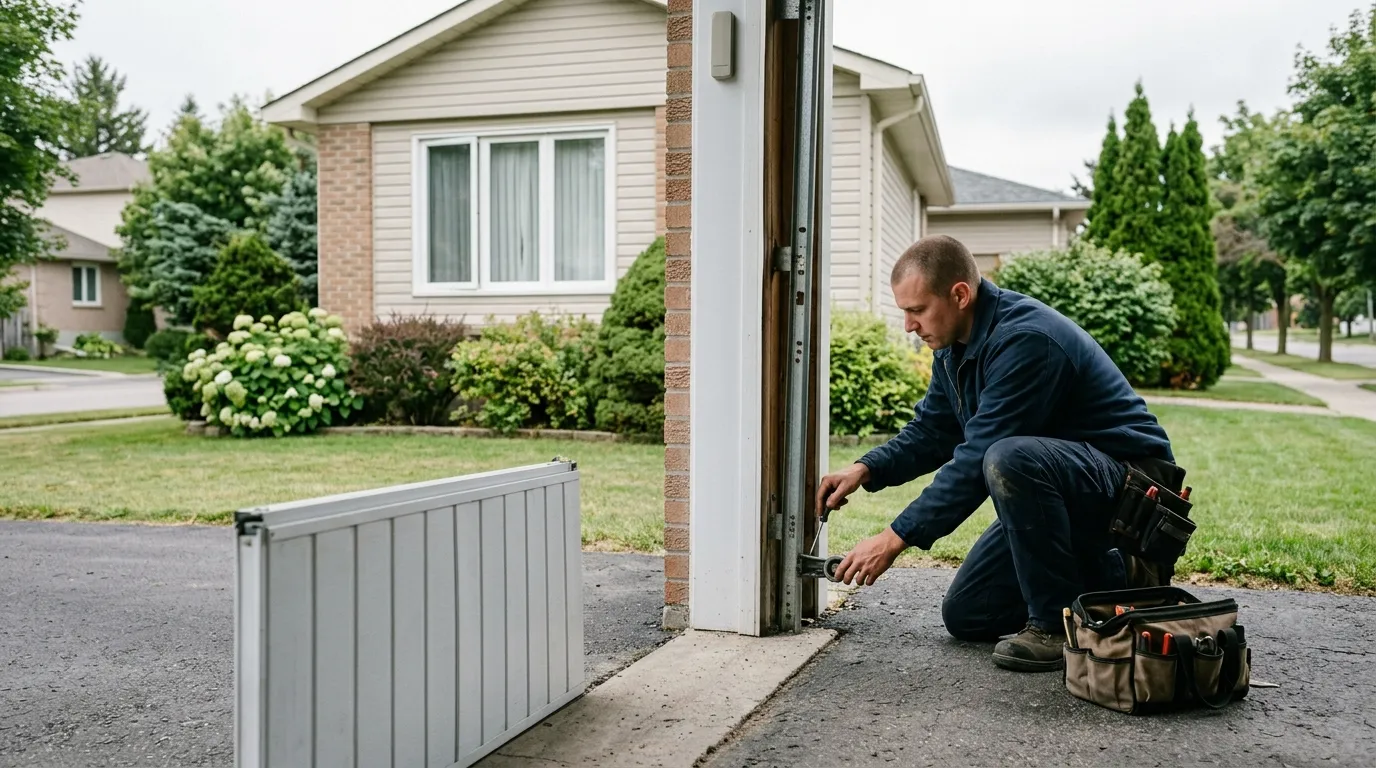
Garage Door Repair
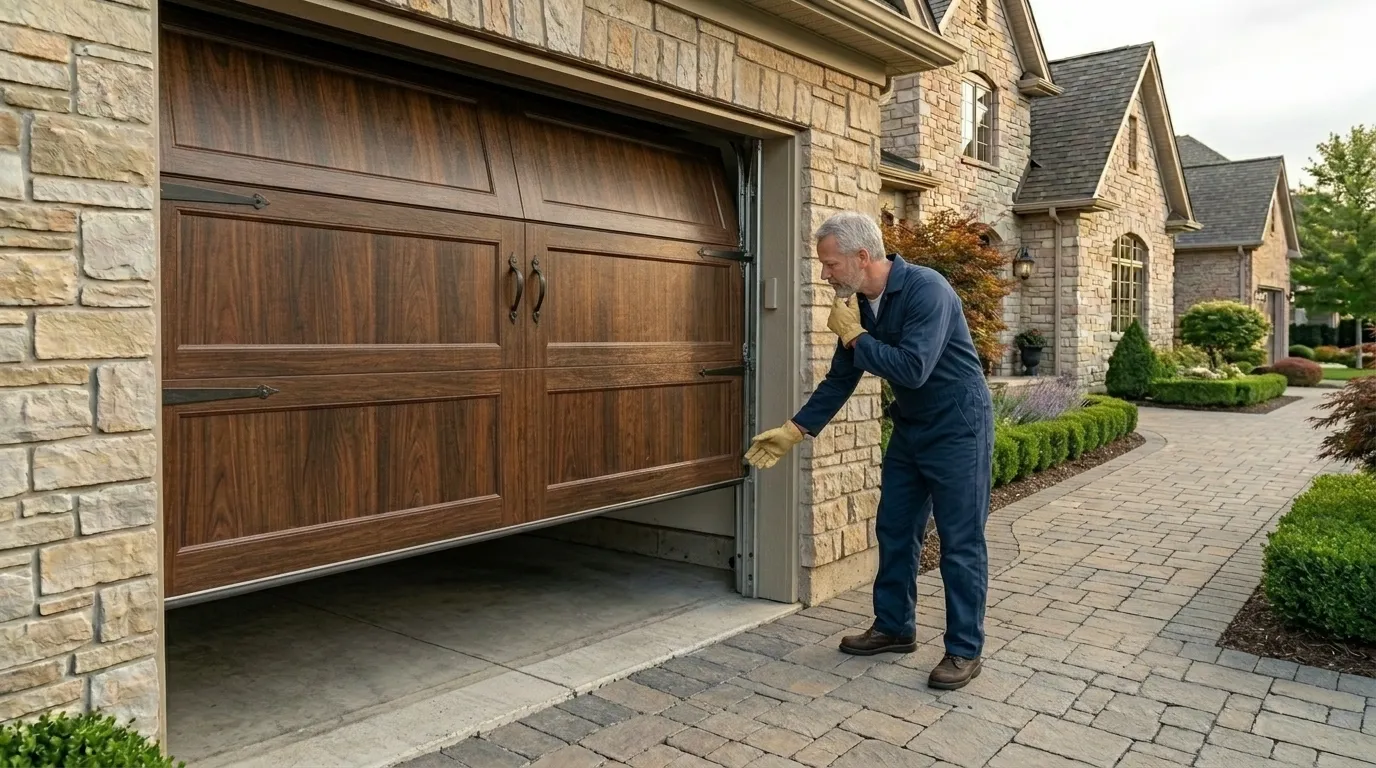
Springs, cables, tracks, rollers, and openers fixed by a tech who explains the problem before touching anything.
Learn more →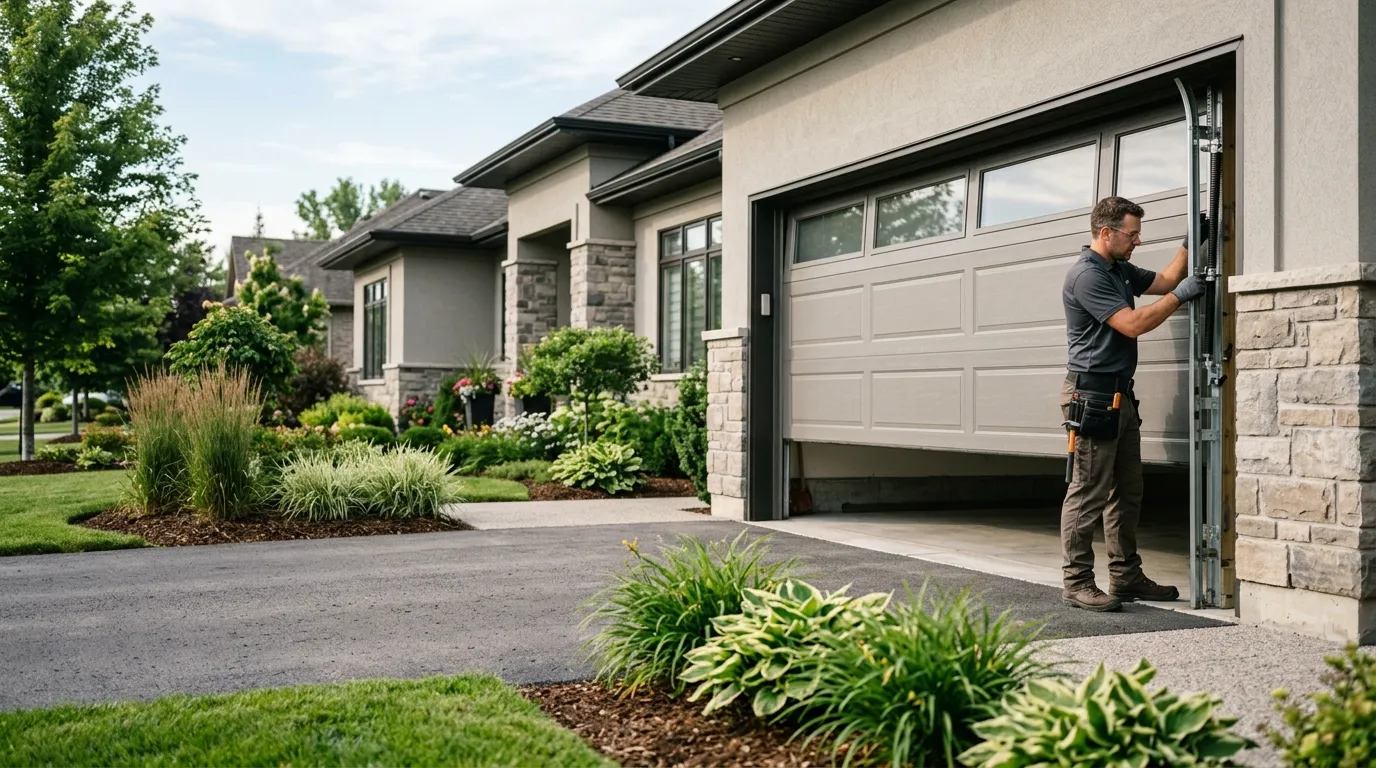
Garage Door Installation
New sectional doors sized and installed for the housing stock actually built in this area.
Learn more →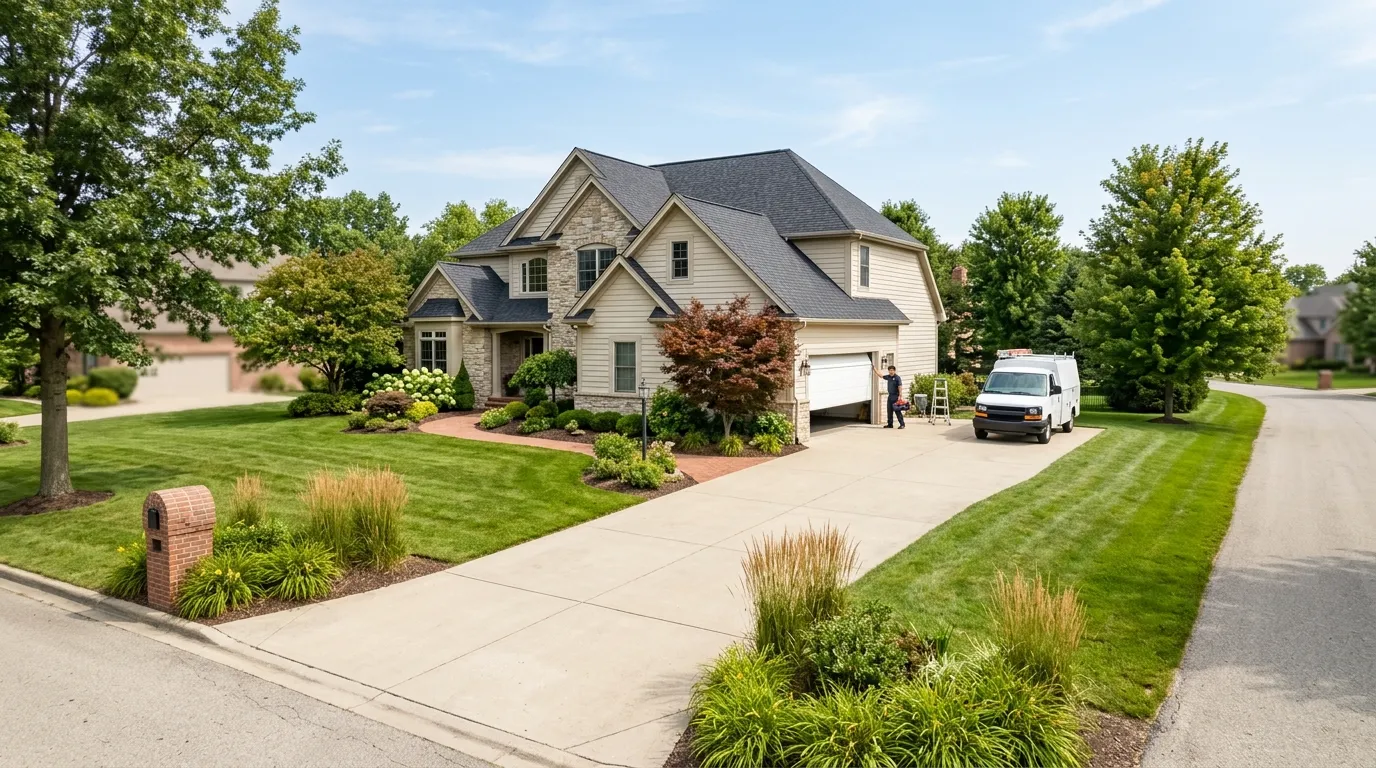
Garage Door Service
Tune-ups, lubrication, and safety checks that catch a small problem before it becomes a service call.
Learn more →Frequently Asked Questions
How do I know if my garage door is too old to repair?
If your house was built in the 1969-2003 window that covers most of Fayetteville and the door has its original springs and track, age alone isn't the deciding factor - condition is. A door that's still balanced and running on true track is usually worth fixing. One with a warped panel, rusted-through track, or a bent shaft is not.
Why does my door get noisier in winter?
Fayetteville's cold-moderate climate means steel hardware and lubricant both react to seasonal temperature swings. On an older door, decades of that cycling loosens bolts and dries out rollers, which shows up as extra noise and slower movement, especially on doors from the area's 1980s-90s housing stock.
Is it cheaper to fix or replace an old door?
Depends on what's wrong. A spring, roller, or cable repair on an otherwise sound 1980s-90s door is usually the cheaper path. Once you're looking at a warped panel or a track that's rusted through, replacement often costs less over time than repeated repairs.
Have a Door That Needs a Second Opinion?
Call and describe what it is doing - we will tell you what it likely is.