
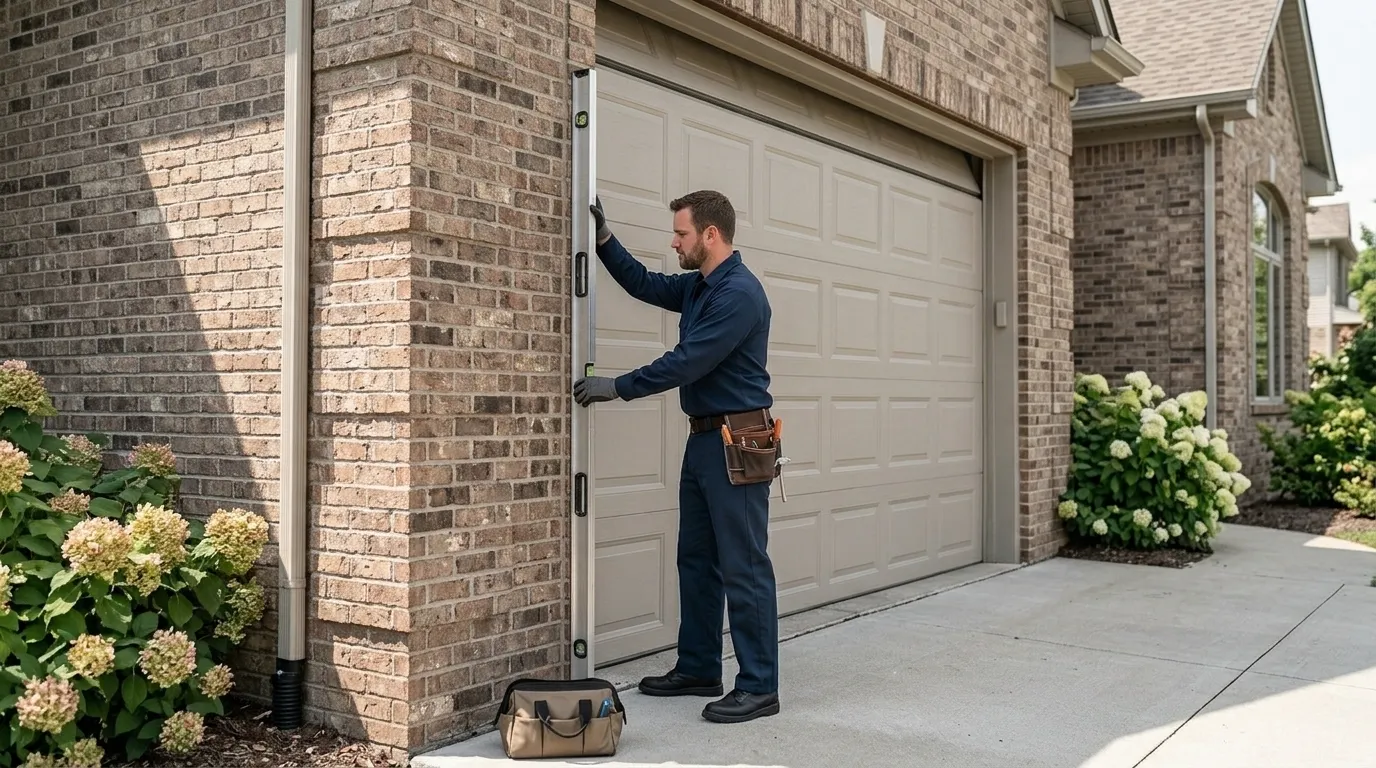
Service
Garage Door Repair for Fayetteville's 1970s-2000s Housing Stock
Fayetteville homes built between 1969 and 2003 are hitting original spring lifespan. We diagnose and repair torsion spring failure fast, with parts on the truck.
- Licensed & Insured
- Same-Area Service Calls
- Upfront Pricing
What Happens When You Call
-
1
Call or Request a Quote
Tell us what the door is doing and roughly how old the house is - that alone points us toward the likely part before a truck leaves.
-
2
On-Site Diagnosis
A tech checks the spring, cables, tracks, and opener in person and tells you plainly what is actually wrong.
-
3
Straight Price, No Surprises
You get a number before any work starts. It covers parts and labor, nothing added after the fact.
-
4
Fixed the Same Visit
Most repairs are done in one trip. If a part needs sourcing, we tell you that upfront instead of guessing.
Why It Happens Here
Most garage doors in Fayetteville went in when the house did, somewhere between 1969 and 2003, with the bulk clustered around 1988. That's not a coincidence - it's a builder's timeline, and it means a lot of the original torsion springs sitting on doors across Fayetteville's ten established neighborhoods are now pushing 30 to 40 years past their rated cycle count. Springs don't fail on a schedule, but they do fail on a curve, and that curve gets steeper the longer a spring has been wound and released through temperature swings.
Fayetteville sits in a cold-moderate climate band, so the steel on these doors goes through real seasonal expansion and contraction - nothing extreme, but enough over three or four decades to work-harden the coil and wear the bearing points on the winding cone. Add in the standard builder-grade hardware from that era, which wasn't spec'd for a long service life to begin with, and you get a predictable pattern: doors that opened fine last winter start binding, sagging on one side, or refusing to move at all once the weather turns. It's less about bad luck and more about a spring finally reaching the end of a life that started in the Reagan or Clinton years.
What the Repair Takes
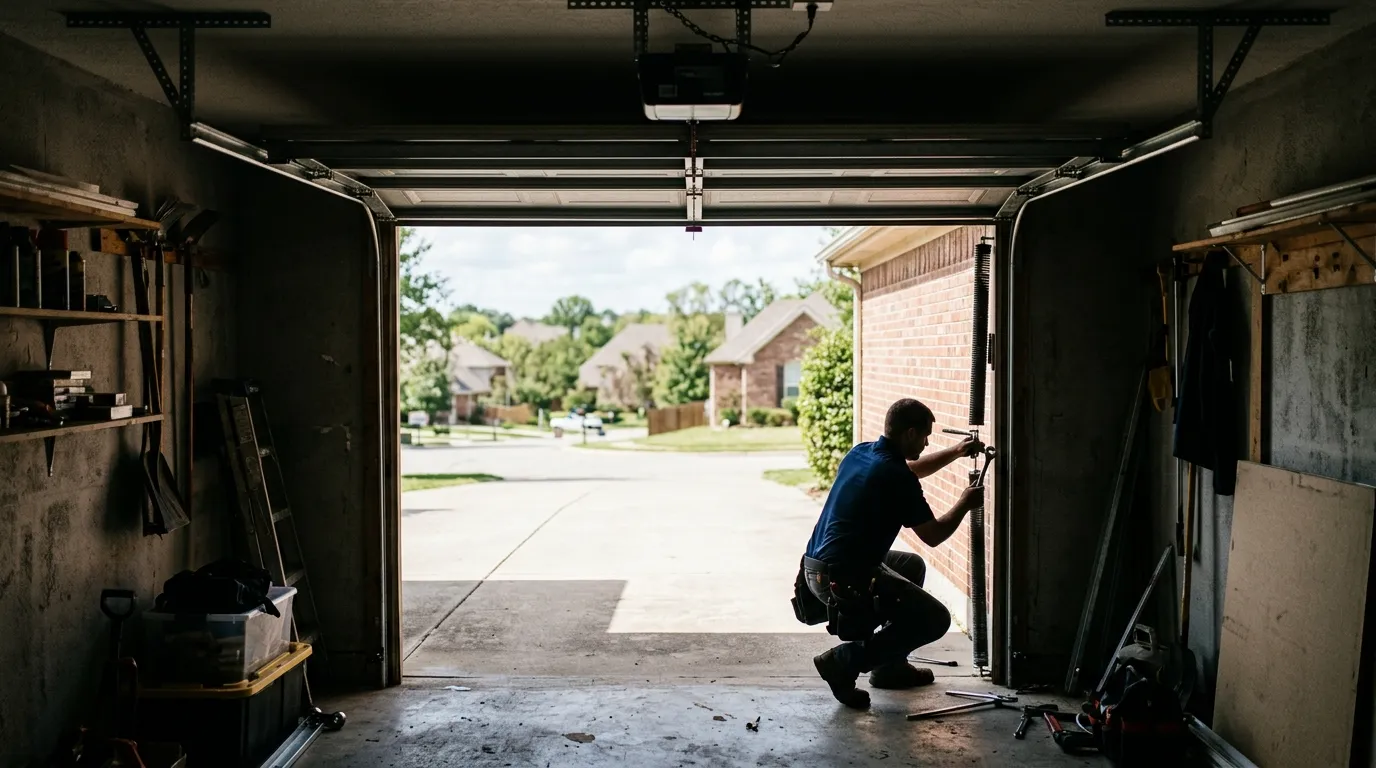
We start by checking the balance - does the door hold position halfway up when disconnected from the opener, or does it drop or fly up. That tells us whether we're dealing with one weak spring, a matched pair that's aged out together, or a track and roller problem masquerading as a spring issue. We check the cables next, since a frayed cable on an older door often gets blamed on the opener when the opener never had a chance.
On a straightforward torsion spring swap, we're winding new springs to the correct wire size and turn count for that door's weight, then re-testing balance before we leave. If the door itself has racked or the tracks have bent from years of an unbalanced spring pulling it sideways, that's a longer job and sometimes not worth it.
Here's the honest limit: if a steel door from the 1980s or early 90s has warped panels on top of a spring failure, putting a new spring on it just moves the next failure to the hinges or the opener gears. At that point we'll tell you straight that replacement costs less over five years than another repair call.
Parts We Carry
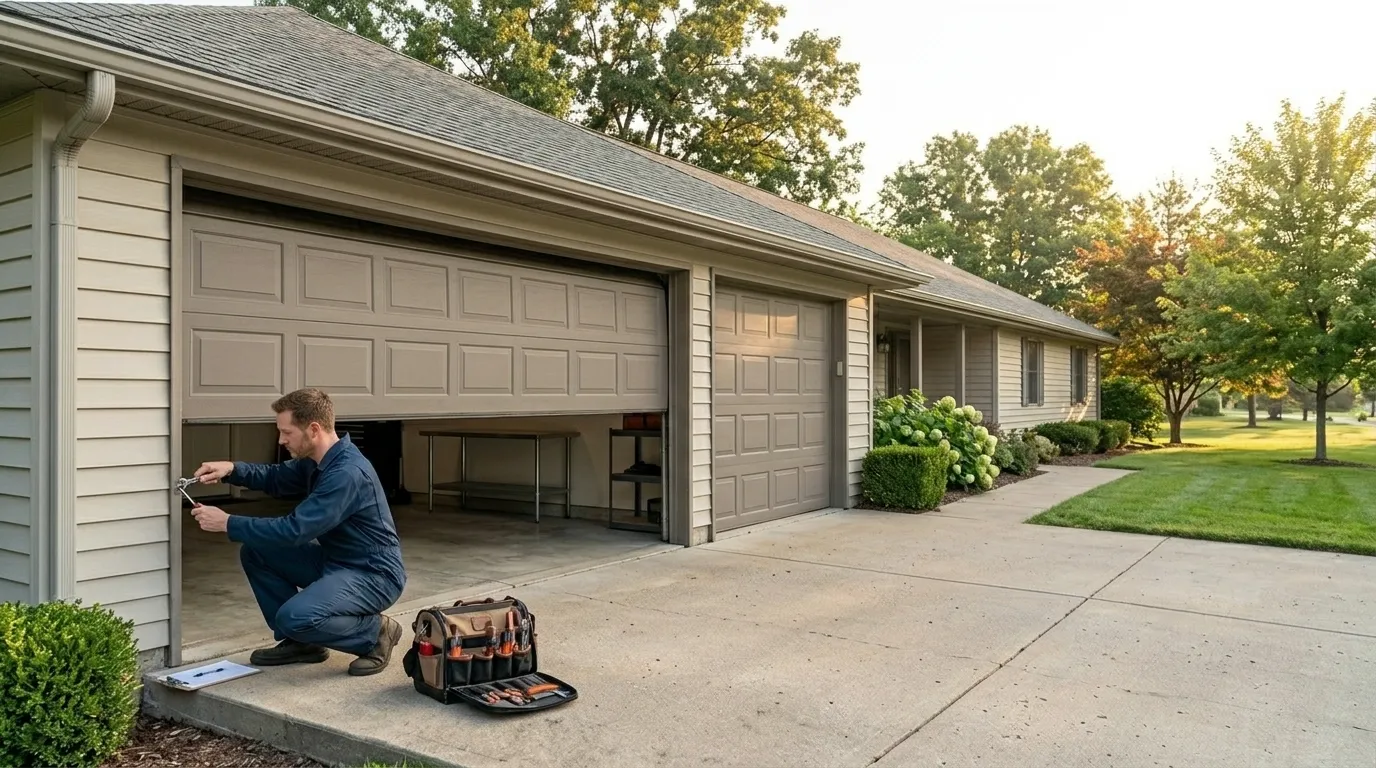
With 7,756 owner-occupied houses in the service area carrying doors from that same building boom, spring failure is one of the most common calls we get in Fayetteville, so we keep torsion springs in the wire gauges and lengths that match standard 7-foot doors from the 1969-2003 era on the truck. That covers most single and double doors across the ten named subdivisions we work in without a special order.
We also carry the rollers, lift cables, and end bearing plates that wear out alongside a spring on a door that age - replacing all of it in one visit costs less in labor than three separate trips. What we don't stock are specialty sizes for custom or imported doors; those take a lead time, and we'll tell you upfront if your door falls into that category instead of promising a same-day fix we can't deliver.
The Symptom
The classic sign is a loud bang from the garage followed by a door that won't budge or feels twice as heavy when you try to lift it by hand - that's a torsion spring letting go, not the opener dying. A quieter version shows up as a door that closes unevenly, dropping faster on one side, or an opener that strains and reverses partway through the cycle. Both point to the same worn spring, just at different stages of failure.
Homeowners as far out as Hope Mills and Spring Lake, both under ten miles from the shop, call in with the same symptom on doors built in the same stretch of years, which is a good sign this isn't a fluke with your particular door - it's the age of the hardware catching up all at once. If your door is making a grinding noise instead of a bang, that's usually a roller, not a spring, and worth mentioning when you call so we bring the right parts the first trip.

Talk to a Technician Before You Book
Describe what the door is doing and get a straight answer on what it likely needs.
Other Ways We Can Help
Jobs Like Yours
Recent work from this service line.
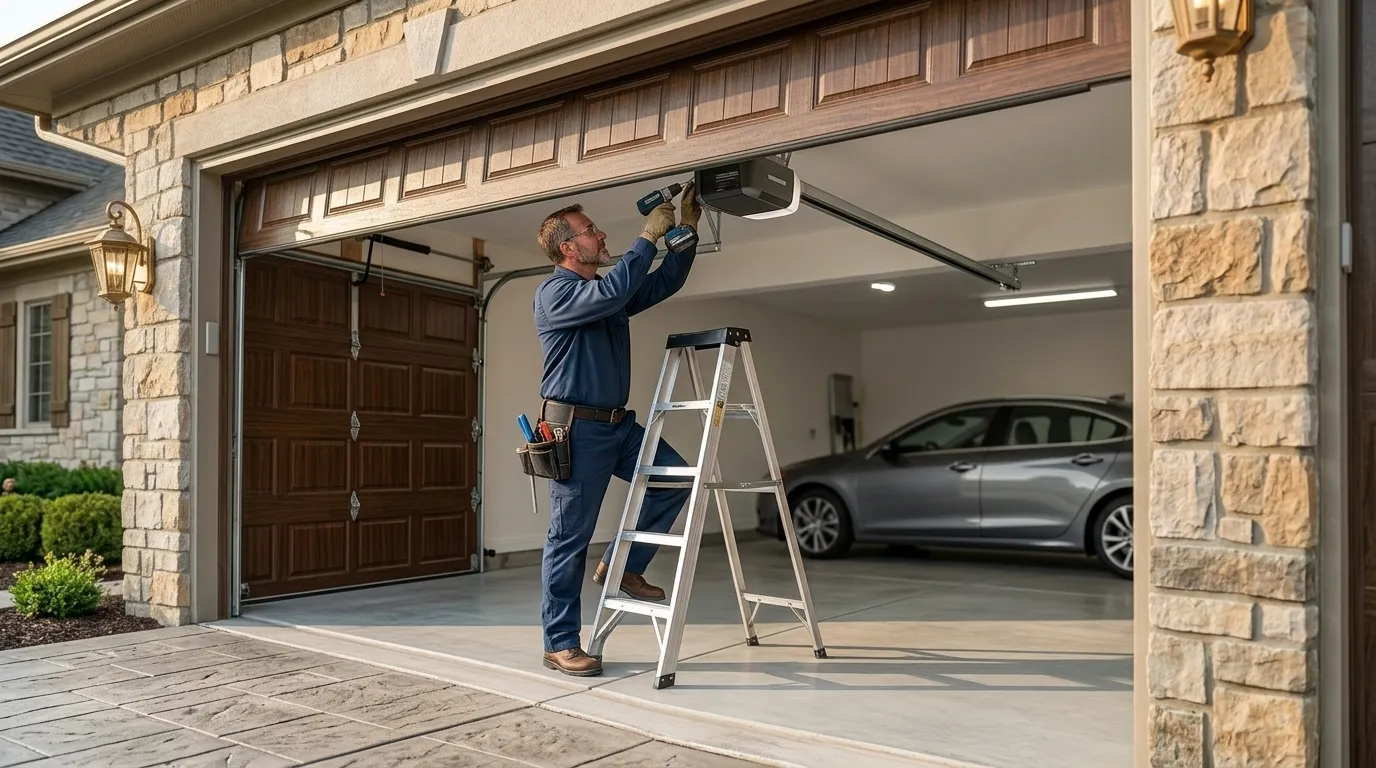
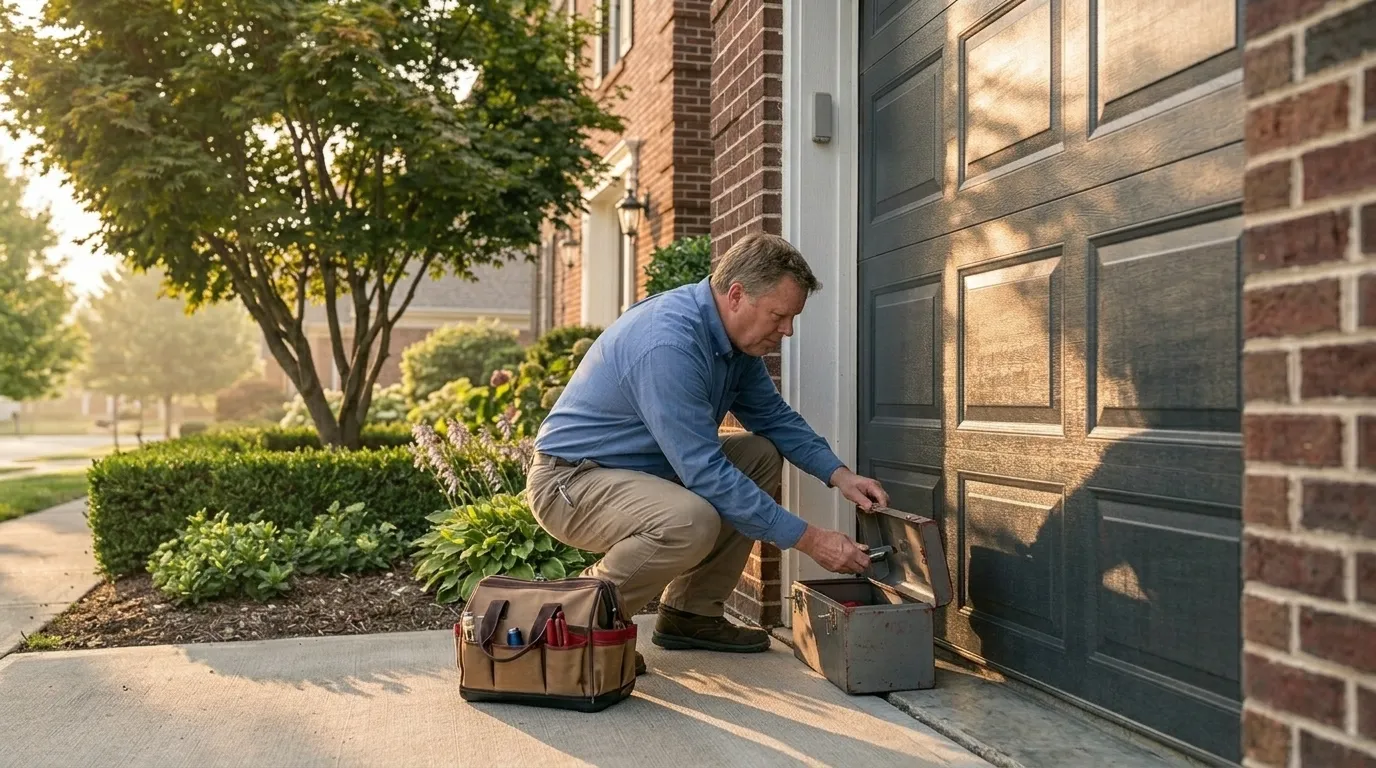
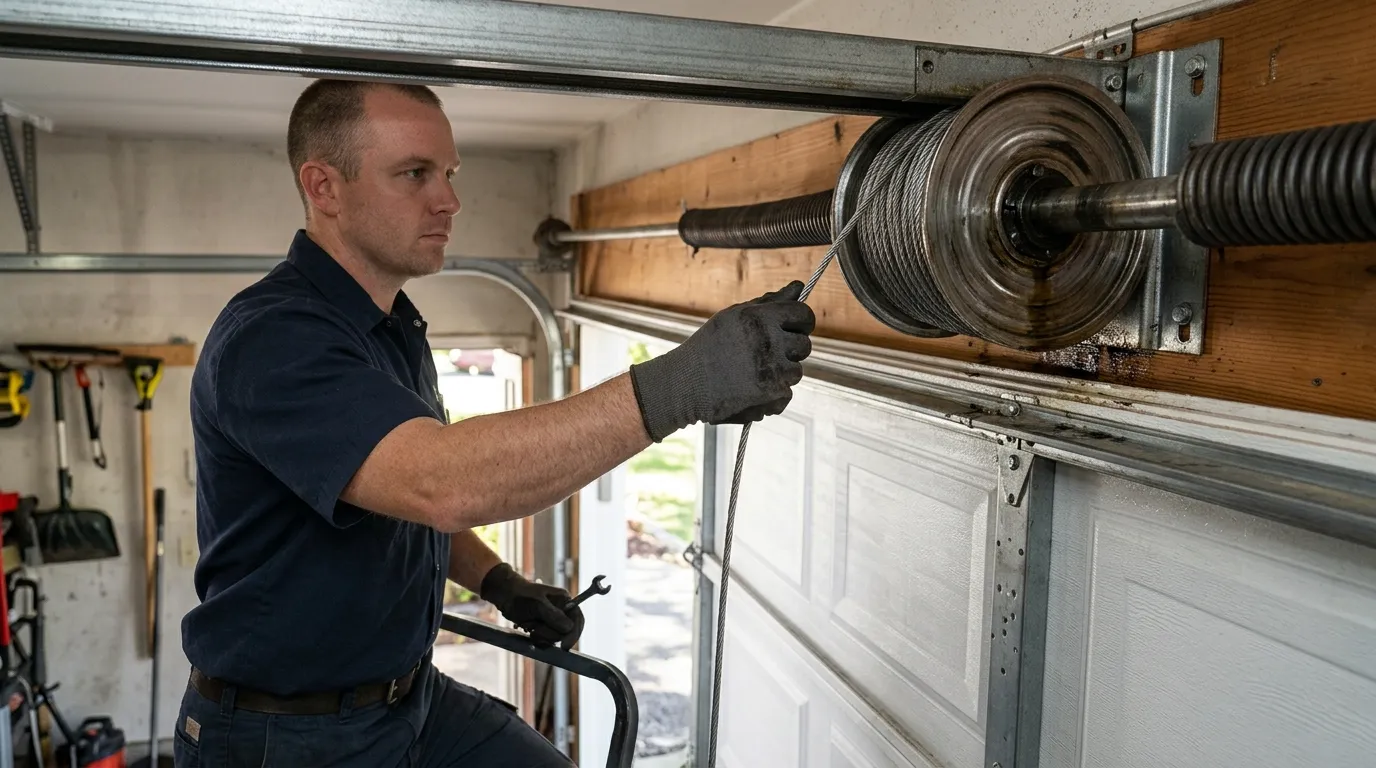
Why Fayetteville Calls Us
Frequently Asked Questions
Why did my spring snap with no warning?
Torsion springs rarely give warning. They wind and unwind thousands of times, and after 30-plus years of that cycle in a cold-moderate climate, the metal fatigues and lets go on what feels like an ordinary lift. If your house was built in the 1970s through the 1990s, the spring is likely original.
Is it cheaper to replace the door or just the spring?
If the panels and tracks are straight, a spring swap is the cheaper fix and usually solves the problem. If the door has racked or the panels are dented and warped from years of running unbalanced, we'll tell you honestly when replacement makes more financial sense over the next few years.
Do you carry the parts for older Fayetteville doors on the truck?
For standard 7-foot doors from the common 1969-2003 building era, yes - springs, cables, rollers, and bearing plates are stocked. Custom or imported door sizes sometimes need to be ordered, and we'll say so upfront rather than guess.
How do I know if it's the spring or the opener?
Disconnect the opener and lift the door by hand. If it feels heavy, drops on its own, or won't hold position halfway up, that's the spring, not the opener. A healthy spring lets the door stay put wherever you leave it.
Need Garage Door Repair for Fayetteville's 1970s-2000s Housing Stock?
Call now for straight answers on cost and timing.